
Who’s Stronger — And Does Color Even Matter?
At airport immigration counters around the world, one small booklet carries enormous significance: the passport.
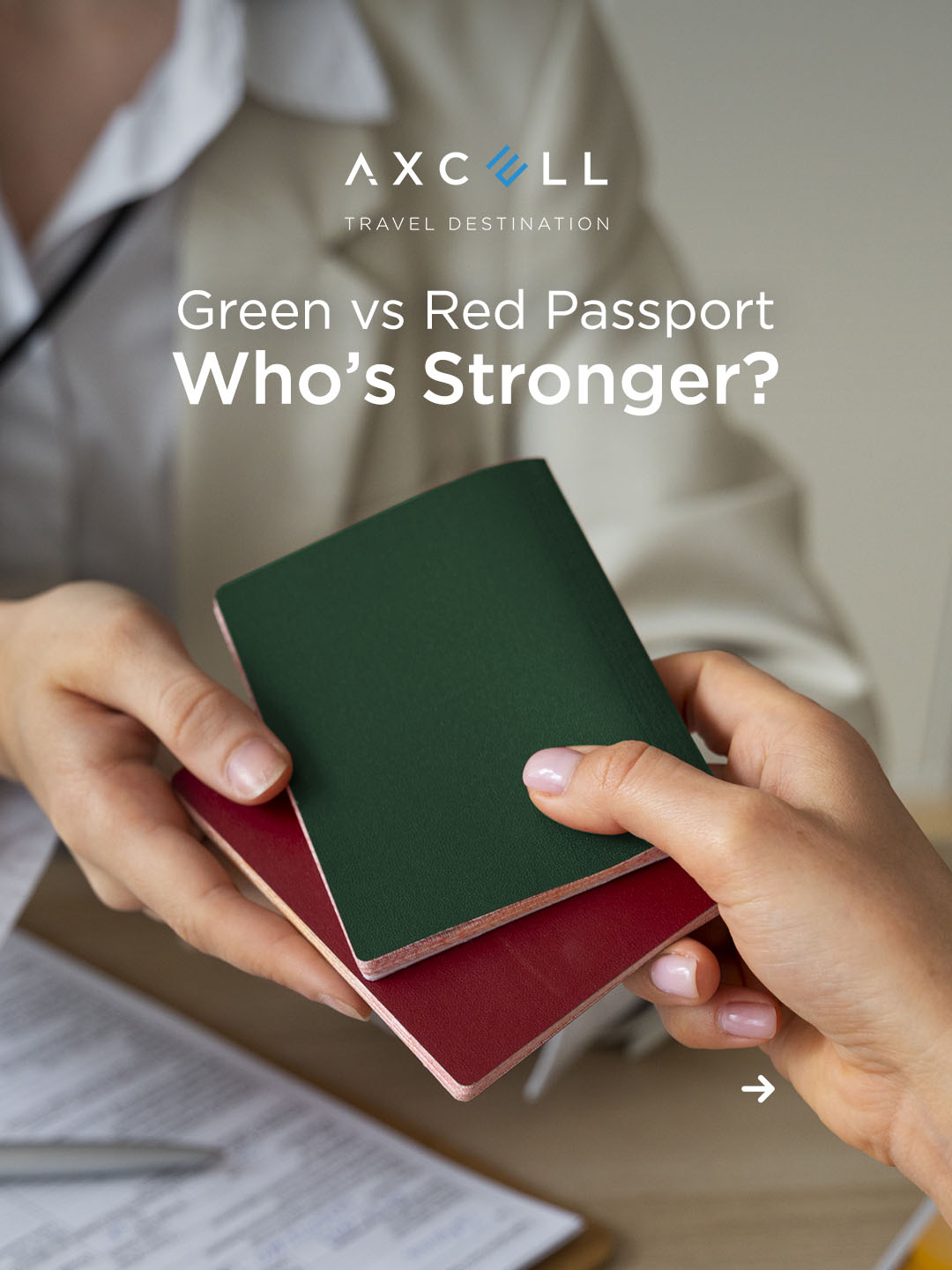
Some are deep green. Others bold red. Many are navy blue. A few even come in sleek black. For years, travelers have speculated that passport color might reveal something about its strength or global influence.
Does a green passport mean more power?
Is a red one stronger because many European countries use it?
The truth may surprise you.
Passport color has zero impact on how powerful it is.
So what actually determines passport power?
Let’s break it down.
Do Passport Colors Matter?
Symbolism vs. reality
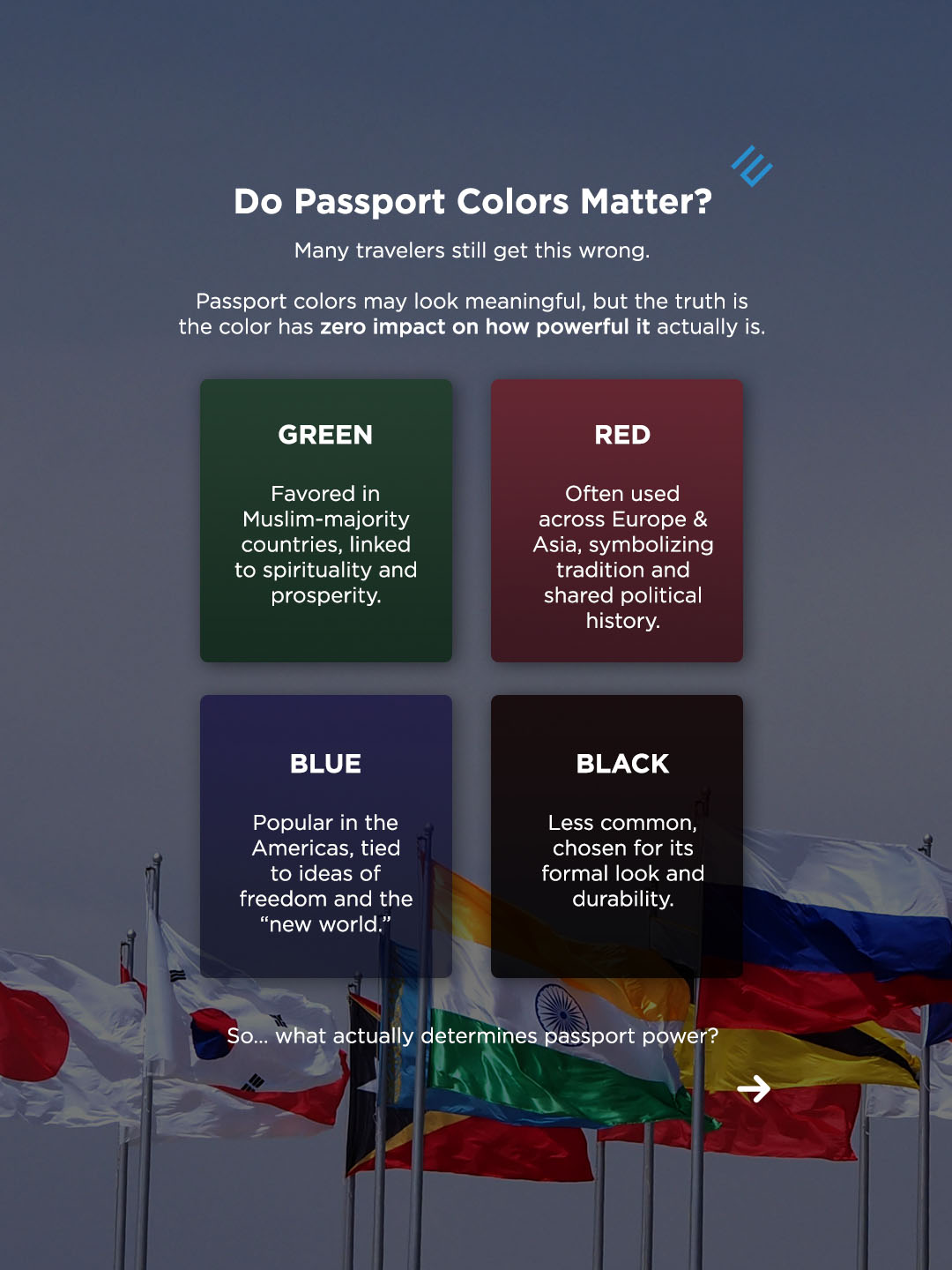
Passport covers often carry cultural or political symbolism, but they do not determine global mobility.
The four most common passport colors worldwide are:
Green
Red
Blue
Black
Each has historical or symbolic meaning—but none automatically grants greater travel access.
Green — Spirituality & Prosperity
Green passports are commonly used in many Muslim-majority countries.
The color green is traditionally associated with:
Spiritual significance
Prosperity
Cultural heritage
However, a green passport does not inherently provide stronger visa access. Its mobility depends entirely on diplomatic agreements between governments.
Red — Tradition & Political Ties
Red passports are widely used across Europe and parts of Asia.
Many European Union member states use burgundy-red covers as a shared design identity, symbolizing regional unity and political history.
But again, the color itself does not create strength. It’s the diplomatic relationships behind it that matter.
Blue — Freedom & the “New World”
Blue passports are common in the Americas and several other nations worldwide.
In some contexts, blue is associated with:
Freedom
The “new world”
Stability
Yet mobility strength varies widely among blue passports.
Black — Formal & Durable
Black passports are less common but chosen by certain countries for their formal appearance and practicality. Dark covers can appear more durable and sleek.
Still, a black cover offers no automatic advantage in visa-free travel.
So What Determines Passport Power?
Diplomacy, not design
Passport power is built through diplomatic networks and international agreements.
It is measured by how many destinations a passport holder can enter:
Visa-free
With visa on arrival
With minimal electronic authorization
The more countries accessible without pre-arranged visas, the stronger the passport.
Diplomatic Strength
Countries with extensive diplomatic relationships often negotiate reciprocal visa-free agreements.
These agreements depend on:
Political stability
Economic influence
Security standards
Bilateral trust
Strong diplomacy equals stronger mobility.
Global Mobility Index
Passport rankings are typically based on global mobility indexes that track visa access across the world.
These rankings change annually depending on new agreements or geopolitical shifts.
Passport power is dynamic, not fixed.
The World’s Strongest Passports (Current Rankings)
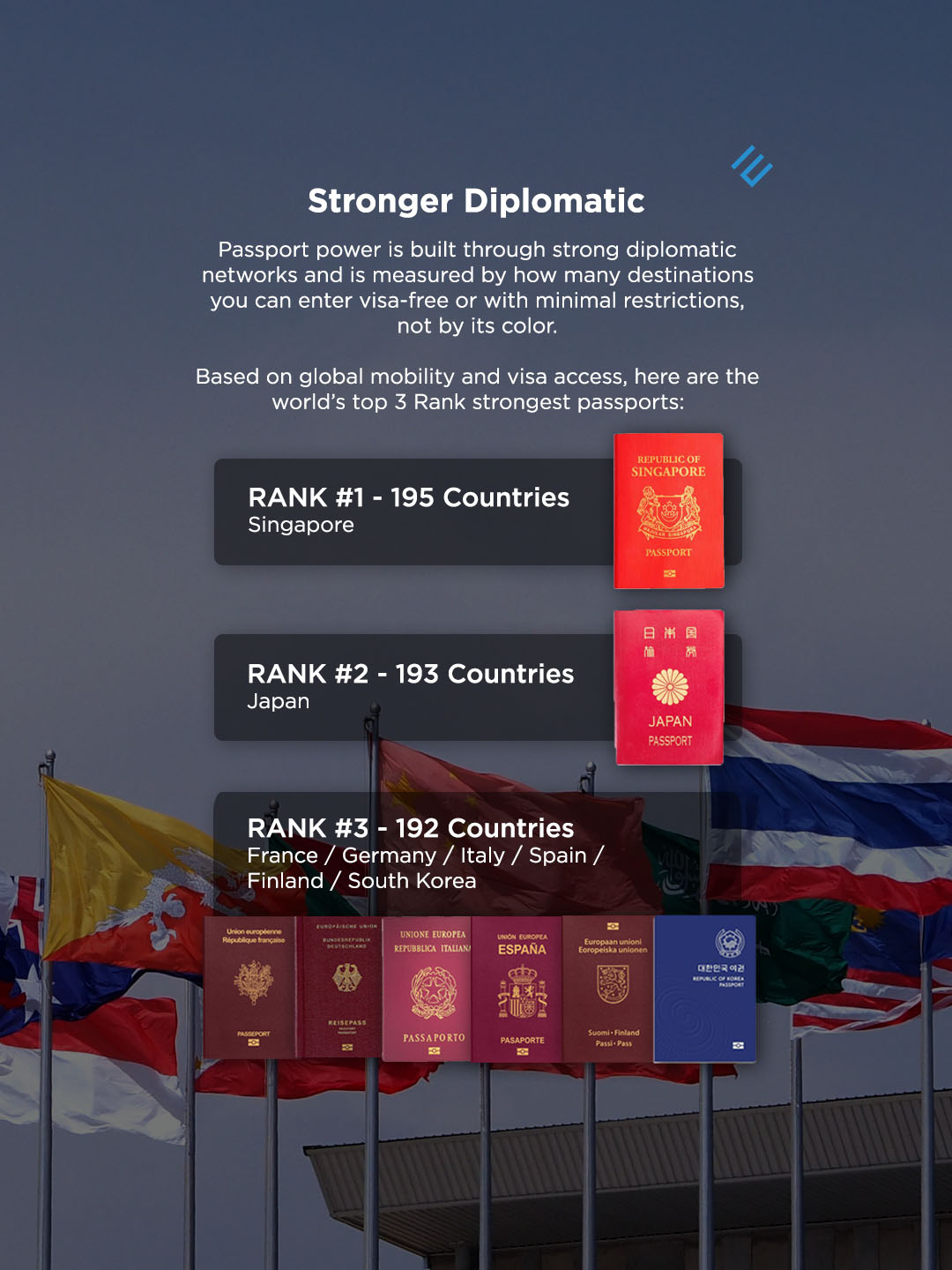
Based on global visa-free access, here are the top-ranked passports:
Rank 1 — Singapore (195 Countries)
The passport of Singapore currently leads global rankings.
With access to 195 destinations visa-free or with minimal restrictions, Singapore’s strength reflects:
Strong diplomacy
Economic stability
International trust
It is a prime example that passport power is about policy, not color.
Rank 2 — Japan (193 Countries)
The passport of Japan consistently ranks among the world’s strongest.
With access to 193 destinations, Japan benefits from:
Stable governance
Robust international relations
Global economic presence
Its strength reflects decades of diplomatic engagement.
Rank 3 — Multiple European & Asian Countries (192 Countries)
Several nations tie closely in third place with access to 192 destinations, including:
France
Germany
Italy
Spain
Finland
South Korea
These passports benefit from strong regional cooperation, especially within the European Union, and global diplomatic networks.
Why Passport Strength Matters
A privilege not everyone shares
For frequent travelers, passport strength directly affects:
Travel flexibility
Business opportunities
Tourism convenience
Spontaneous trips
A powerful passport reduces paperwork, waiting times, and visa fees.
However, passport inequality also highlights global disparities. Not all citizens enjoy equal mobility. Visa requirements reflect complex global politics.
Beyond Rankings
What truly defines freedom of movement
While rankings focus on numbers, passport strength also reflects:
Political trust
Security standards
Global reputation
International cooperation
It’s not about design. It’s about relationships.
And those relationships evolve.
A passport that ranks highly today may shift tomorrow depending on global events.
It’s Not the Color — It’s the Connection
Green or red. Blue or black.
Passport covers may symbolize culture or history, but they do not determine strength.
Real passport power is built through diplomacy, economic ties, and global cooperation.
So the next time you see someone comparing passport colors, remember:
Strength isn’t printed on the cover.
It’s written in international agreements, trust between nations, and the freedom to move across borders.
In the end, passport power isn’t about appearance.
It’s about access.
Add a Comment