

A Respectful Traveler’s Guide Before Visiting Japan
Traveling to Japan is an unforgettable experience. From serene temples and futuristic cityscapes to quiet tea houses and bustling train stations, Japan offers a beautiful blend of tradition and modern life.
But beyond the landmarks and cuisine, one of the most important things to understand before visiting is etiquette.
Japanese society places a strong emphasis on respect, harmony, and consideration for others. Many everyday actions—how you greet someone, how you walk in public spaces, even how you place your chopsticks—carry cultural meaning.
Understanding these small yet significant manners will not only help you avoid awkward situations but also show appreciation for local customs.
Here are five essential etiquette tips every traveler should know before going to Japan.
Always Bow When Greeting
Respect begins with a simple gesture
The Meaning Behind the Bow
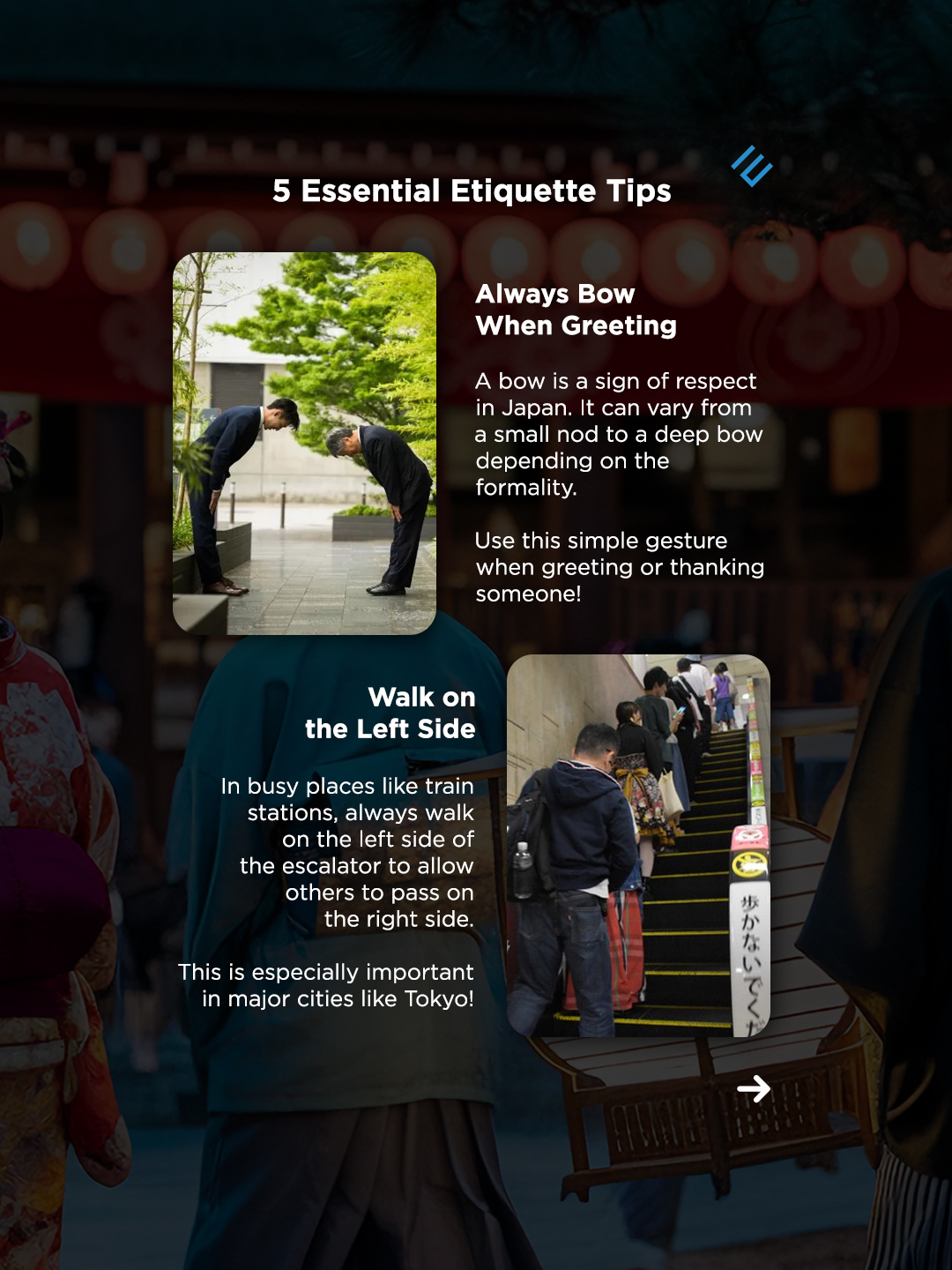
In Japan, bowing is more than a greeting—it is a symbol of respect, humility, and acknowledgment. While handshakes are increasingly common in international business settings, bowing remains deeply rooted in daily interactions.
A bow can vary in depth and duration depending on the situation:
A small nod for casual greetings
A slight bow for polite exchanges
A deeper bow for formal or apologetic situations
As a traveler, you don’t need to perfect the technique. A gentle bow of the head when greeting, thanking, or saying goodbye is appreciated.
When to Bow
You may bow when:
Meeting someone for the first time
Saying thank you
Apologizing
Entering or leaving a shop
Even staff in stores and restaurants will often bow as a sign of courtesy. Returning a small bow shows cultural awareness and respect.
Walk on the Left Side
Order and efficiency in public spaces
Navigating Busy Cities
In major cities like Tokyo, public spaces can become extremely crowded—especially in train stations during rush hour.
One important rule to remember: walk on the left side.
This system helps maintain smooth pedestrian flow. On escalators in many regions, people stand on the left and allow others to pass on the right (though practices can vary slightly by city).
Why It Matters
Japanese society values harmony and efficiency. Following pedestrian flow demonstrates consideration for others and prevents unnecessary disruption.
If you’re unsure, simply observe locals and follow their movement.
Being mindful of space is a key part of respectful travel in Japan.
Don’t Stick Chopsticks in Your Food
Dining etiquette carries deep cultural meaning
The Cultural Significance
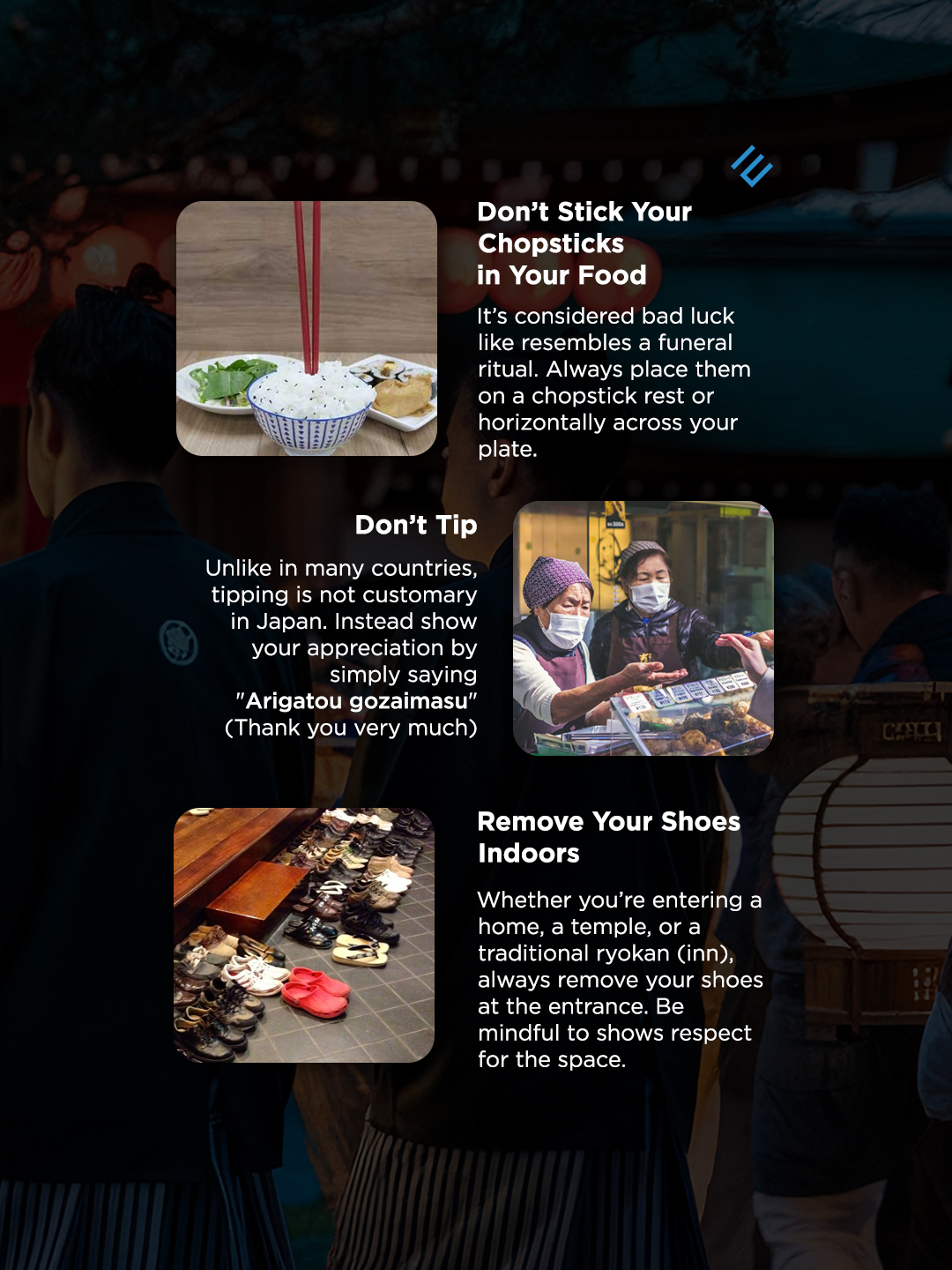
One of the most important dining rules in Japan is never sticking your chopsticks upright into a bowl of rice.
Why? Because this action resembles a funeral ritual where rice is offered to the deceased with chopsticks standing vertically.
Doing so at the dinner table is considered bad luck and inappropriate.
Proper Chopstick Placement
When not using your chopsticks:
Place them on a chopstick rest (hashioki)
Lay them horizontally across your plate or bowl
Avoid:
Passing food directly from chopsticks to chopsticks
Using chopsticks to point
Japanese dining etiquette reflects mindfulness and respect—not just for people, but for the food itself.
Don’t Tip
Gratitude looks different in Japan
Why Tipping Is Not Customary
In many countries, tipping is expected as a reward for good service. In Japan, however, tipping is not part of the culture.
Service workers take pride in delivering excellent hospitality without expecting extra payment. Leaving money on the table may even cause confusion or be politely returned.
How to Show Appreciation
Instead of tipping, express gratitude verbally by saying:
“Arigatou gozaimasu” (Thank you very much).
A sincere thank you and a polite bow carry more meaning than additional cash.
Understanding this difference prevents awkward moments and shows respect for local norms
Remove Your Shoes Indoors
Cleanliness and respect go hand in hand
When to Remove Shoes
In Japan, removing shoes before entering indoor spaces is common practice.
You will be expected to remove shoes when entering:
Private homes
Traditional inns (ryokan)
Certain restaurants
Temples and shrines
Some schools and historic buildings
Look for a designated area near the entrance called a “genkan,” where shoes are placed.
Why It Matters
The practice of removing shoes reflects:
Cleanliness
Respect for shared spaces
Cultural tradition
Indoor spaces are considered clean environments. Wearing outdoor shoes inside disrupts that boundary.
Often, slippers are provided. Follow local cues and place your shoes neatly to the side.
The Spirit Behind Japanese Etiquette
Japanese manners are rooted in a broader concept of wa, meaning harmony. The goal is not rigid perfection but consideration for others.
You’ll notice:
People speak softly in public transportation
Phones are kept on silent
Trash is disposed of carefully
These behaviors create an atmosphere of calm order—even in crowded cities.
As a visitor, adopting small gestures of awareness goes a long way.
Travel with Respect, Experience More
Visiting Japan becomes far more meaningful when you understand its social customs. Bowing, walking on the left, using chopsticks properly, refraining from tipping, and removing your shoes indoors may seem like small details—but they reflect deep cultural values.
Respect is at the heart of Japanese society.
When you approach your trip with curiosity and mindfulness, you don’t just see Japan—you connect with it.
And in return, you’ll find that Japan’s warmth, hospitality, and beauty feel even more rewarding.
Before you go, remember:
A little etiquette knowledge makes a big difference.
Safe travels—and enjoy discovering Japan the respectful way.
Add a Comment