

A Culinary Journey Through Eid Traditions Around the World
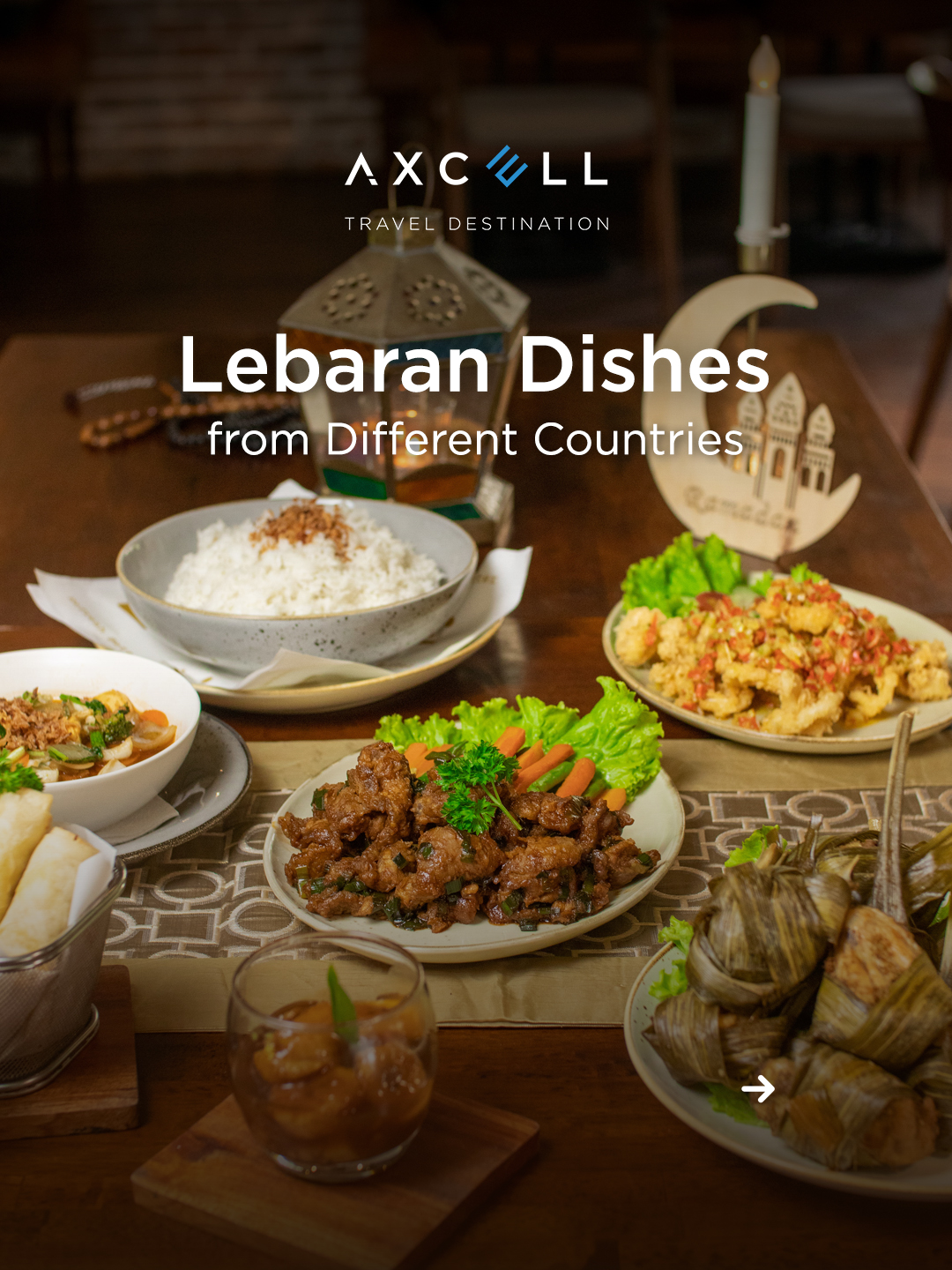
Lebaran—also known globally as Eid al-Fitr—marks the joyful end of Ramadan. After a month of fasting, reflection, and discipline, families gather to celebrate with prayers, forgiveness, and of course, extraordinary food.
Across continents, Eid tables reflect local culture, history, and flavor. While the spirit of the celebration remains the same—gratitude, generosity, and togetherness—the dishes vary beautifully from country to country.
From syrup-soaked pastries in Turkey to coconut-infused rice in Southeast Asia, here’s a delicious journey through Lebaran dishes around the world.
Turkey | Baklava
Sweet layers for Şeker Bayramı
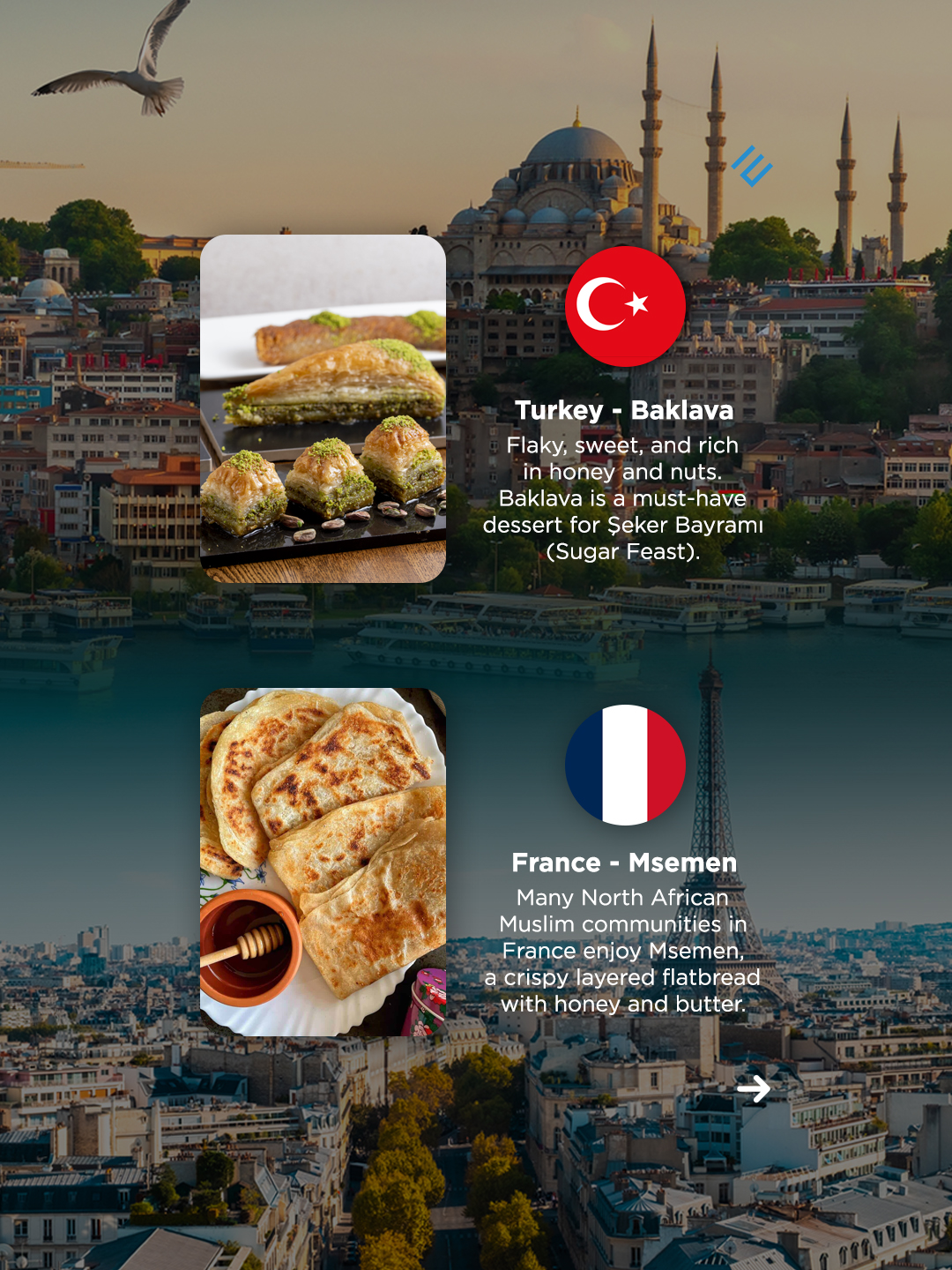
In Turkey, Eid al-Fitr is often called Şeker Bayramı, meaning “Sugar Feast.” The name itself reflects the importance of sweets in the celebration.
At the heart of the dessert table sits baklava—a rich, flaky pastry layered with chopped nuts and drenched in fragrant honey or sugar syrup.
Layers of History
Baklava has deep roots in Ottoman cuisine and is closely associated with hospitality and generosity. Its delicate layers of filo dough represent craftsmanship and patience—qualities celebrated during Ramadan.
On Eid morning, families prepare trays of baklava to serve guests who visit throughout the day. Sharing sweets symbolizes spreading joy after a month of spiritual discipline.
Flavor Profile
Baklava is:
Flaky and crisp
Rich with pistachios or walnuts
Sweetened with honey or syrup
Lightly perfumed with rosewater or orange blossom
Every bite feels celebratory—perfectly fitting for a day of gratitude.
France | Msemen
A North African favorite in European homes
In France, many Muslim communities trace their heritage to North Africa. During Eid, traditional dishes from Morocco, Algeria, and Tunisia fill French kitchens.
One beloved item is msemen—a layered, square-shaped flatbread that is both crispy and soft.
Simple Yet Meaningful
While not as visually elaborate as baklava, msemen’s comfort lies in its simplicity. Paired with mint tea or coffee, it turns Eid morning into a warm and intimate gathering.
A Breakfast Tradition
Msemen is often enjoyed for Eid breakfast, served warm with honey and butter. The preparation involves folding dough multiple times to create thin, flaky layers.
It represents:
Warm hospitality
Family cooperation in the kitchen
The blending of cultures
In France, msemen beautifully reflects how migration shapes culinary traditions.
Saudi Arabia | Kabsa
Aromatic rice at the heart of celebration
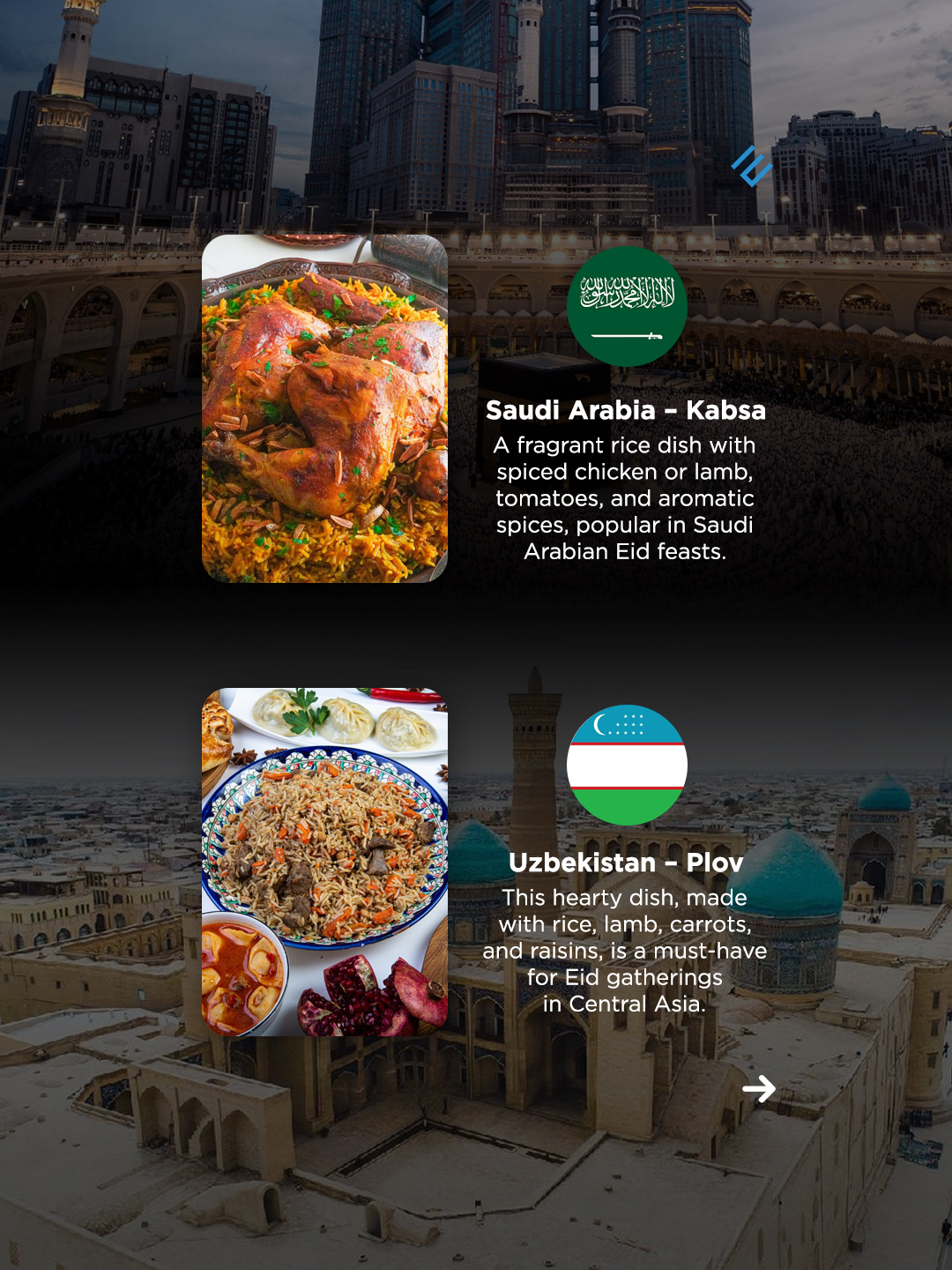
In Saudi Arabia, Eid feasts are centered around kabsa—a fragrant rice dish layered with spiced chicken or lamb.
Kabsa is more than food; it’s a communal experience.
Symbol of Generosity
Serving kabsa reflects abundance and hospitality. During Eid, families prepare generous portions to welcome relatives and neighbors.
In Saudi culture, sharing kabsa reinforces unity and gratitude.
A Feast for Gathering
Large platters of kabsa are placed at the center of the table, encouraging shared dining. The dish combines:
Long-grain rice
Tomatoes
Cinnamon, cardamom, and cloves
Tender meat
The aroma alone fills homes with warmth and anticipation.
Uzbekistan | Plov
A Central Asian celebration staple
In Uzbekistan, no Eid gathering is complete without plov—a hearty rice dish cooked with lamb, carrots, onions, and sometimes raisins.
Plov is deeply woven into Uzbek identity.
Cooked with Care
Traditionally prepared in a large cauldron called a kazan, plov requires attention and skill. The rice absorbs flavors from spices and meat, creating a rich yet balanced dish.
During Eid, plov is served generously to guests, neighbors, and community members.
Community in Every Spoonful
In many Uzbek communities, preparing plov becomes a group effort. The cooking process itself strengthens bonds, turning the meal into both nourishment and celebration.
Malay Tradition | Lemang
Sticky rice with smoky character
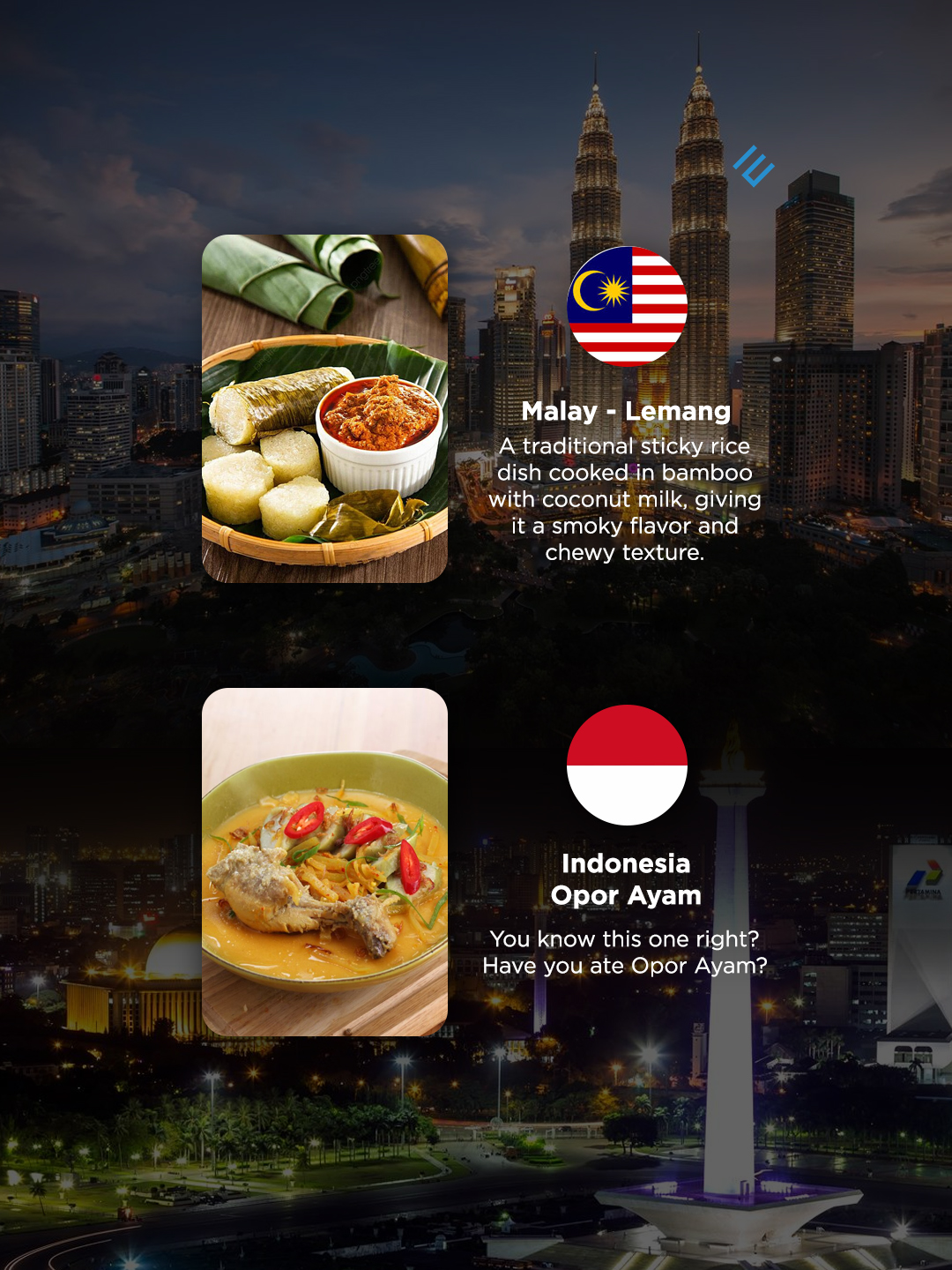
Across Malaysia and parts of Southeast Asia, lemang is a signature Lebaran dish. Made from glutinous rice mixed with coconut milk, it is cooked inside hollow bamboo stalks over an open fire.
The result? A chewy, fragrant rice cake with a subtle smoky flavor.
Nature Meets Tradition
The bamboo cooking method gives lemang its unique taste and texture. The preparation process often happens outdoors, with family members taking turns rotating bamboo tubes over the fire.
Lemang is typically paired with savory dishes like rendang, balancing sweet coconut richness with spiced meat.
Indonesia | Opor Ayam
The taste of home
In Indonesia, one dish instantly signals Lebaran: opor ayam.
This creamy chicken dish, simmered in coconut milk and aromatic spices, is often served with ketupat (rice cakes wrapped in woven palm leaves).
Familiar and Comforting
Opor ayam combines:
Tender chicken
Coconut milk
Lemongrass
Galangal
Turmeric
The flavor is mild yet deeply comforting—perfect for large family gatherings.
For many Indonesians, Eid doesn’t feel complete without opor ayam on the table.
Have you eaten opor ayam yet this Lebaran?
A Global Celebration Through Food
Despite geographic differences, these dishes share common themes:
Hospitality
Generosity
Togetherness
Gratitude
Each culture expresses Eid joy through local ingredients and culinary traditions.
From flaky baklava to fragrant kabsa, hearty plov to creamy opor ayam, food becomes a language that transcends borders.
One Celebration, Many Flavors
Lebaran is not just a religious holiday—it’s a celebration of unity. Though languages, landscapes, and spices differ, the spirit of Eid remains universal.
Every dish tells a story:
Of heritage preserved
Of family gathered
Of gratitude expressed
Exploring Lebaran dishes from different countries reminds us that while traditions may vary, the joy of sharing a meal binds communities together worldwide.
Wherever you are celebrating, may your table be full, your heart grateful, and your Eid filled with blessings.
Add a Comment