
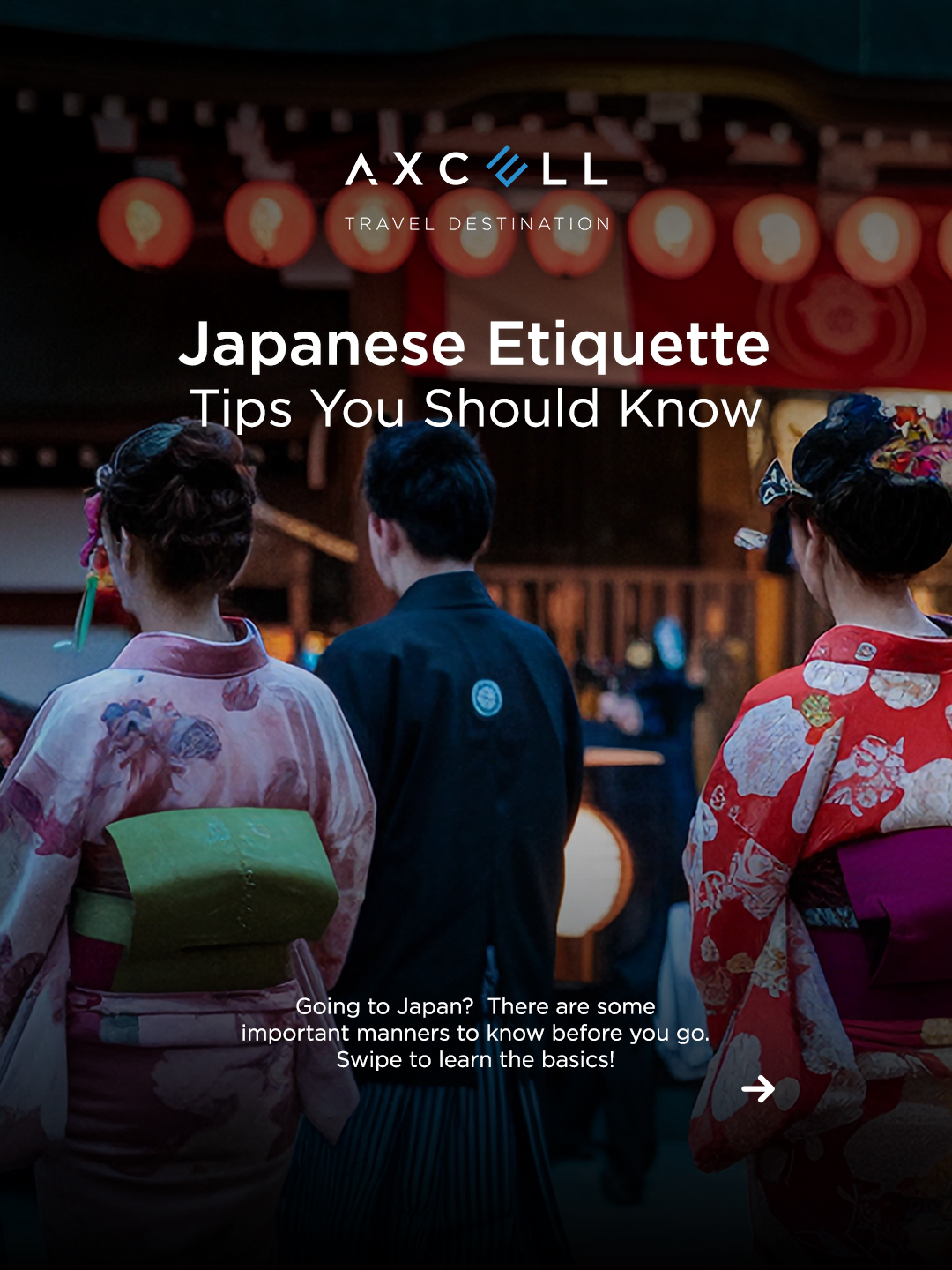
Japanese Etiquette Tips You Should Know

A Respectful Traveler’s Guide Before Visiting Japan

Traveling to Japan is an unforgettable experience. From serene temples and futuristic cityscapes to quiet tea houses and bustling train stations, Japan offers a beautiful blend of tradition and modern life.

But beyond the landmarks and cuisine, one of the most important things to understand before visiting is etiquette.

Japanese society places a strong emphasis on respect, harmony, and consideration for others. Many everyday actions—how you greet someone, how you walk in public spaces, even how you place your chopsticks—carry cultural meaning.

Understanding these small yet significant manners will not only help you avoid awkward situations but also show appreciation for local customs.

Here are five essential etiquette tips every traveler should know before going to Japan.
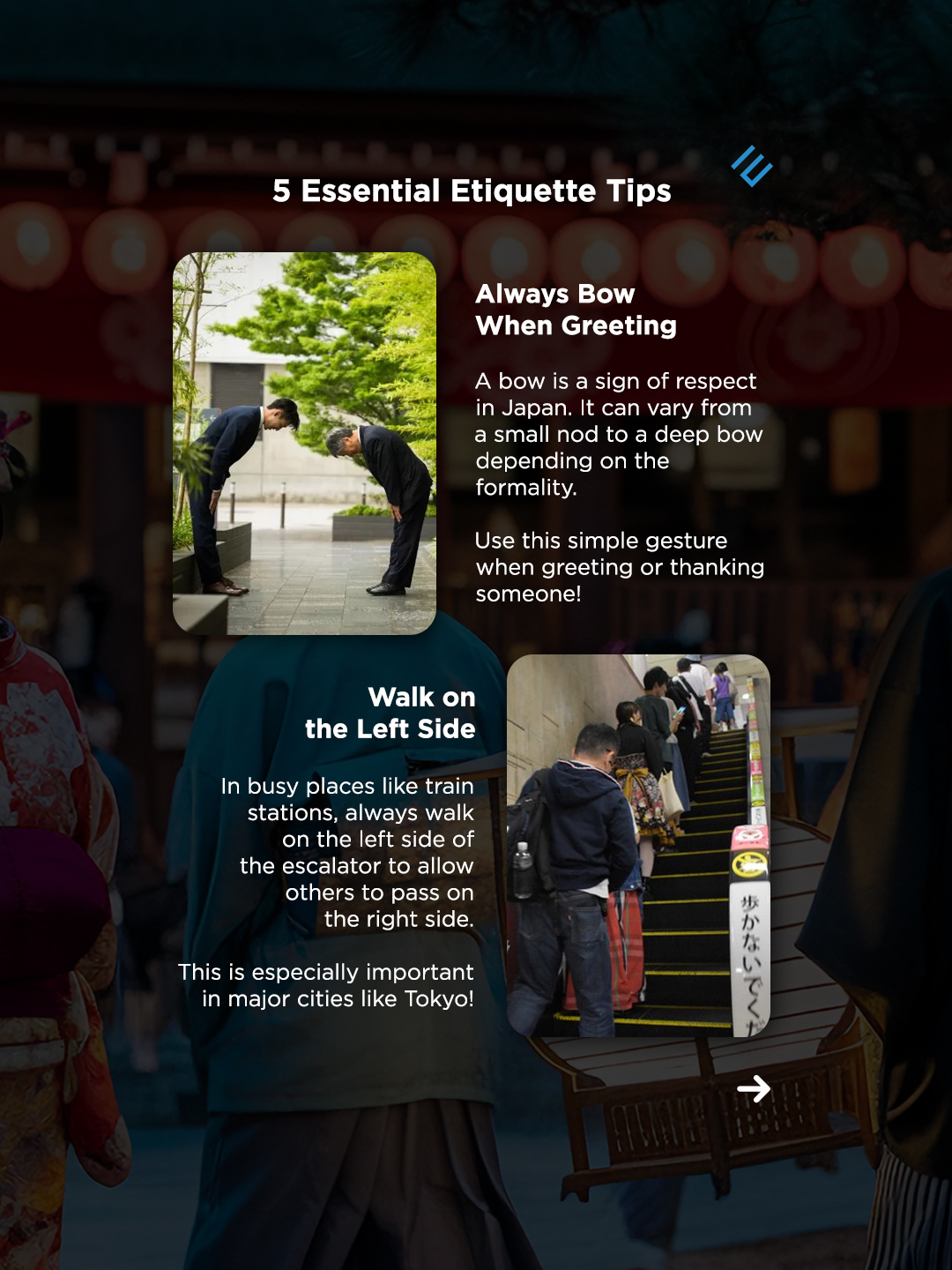
Always Bow When Greeting

Respect begins with a simple gesture

The Meaning Behind the Bow

In Japan, bowing is more than a greeting—it is a symbol of respect, humility, and acknowledgment. While handshakes are increasingly common in international business settings, bowing remains deeply rooted in daily interactions.

A bow can vary in depth and duration depending on the situation:

  • A small nod for casual greetings

  • A slight bow for polite exchanges

  • A deeper bow for formal or apologetic situations

As a traveler, you don’t need to perfect the technique. A gentle bow of the head when greeting, thanking, or saying goodbye is appreciated.

When to Bow

You may bow when:

  • Meeting someone for the first time

  • Saying thank you

  • Apologizing

  • Entering or leaving a shop

Even staff in stores and restaurants will often bow as a sign of courtesy. Returning a small bow shows cultural awareness and respect.

Walk on the Left Side

Order and efficiency in public spaces

Navigating Busy Cities

In major cities like Tokyo, public spaces can become extremely crowded—especially in train stations during rush hour.

One important rule to remember: walk on the left side.

This system helps maintain smooth pedestrian flow. On escalators in many regions, people stand on the left and allow others to pass on the right (though practices can vary slightly by city).

Why It Matters

Japanese society values harmony and efficiency. Following pedestrian flow demonstrates consideration for others and prevents unnecessary disruption.

If you’re unsure, simply observe locals and follow their movement.

Being mindful of space is a key part of respectful travel in Japan.

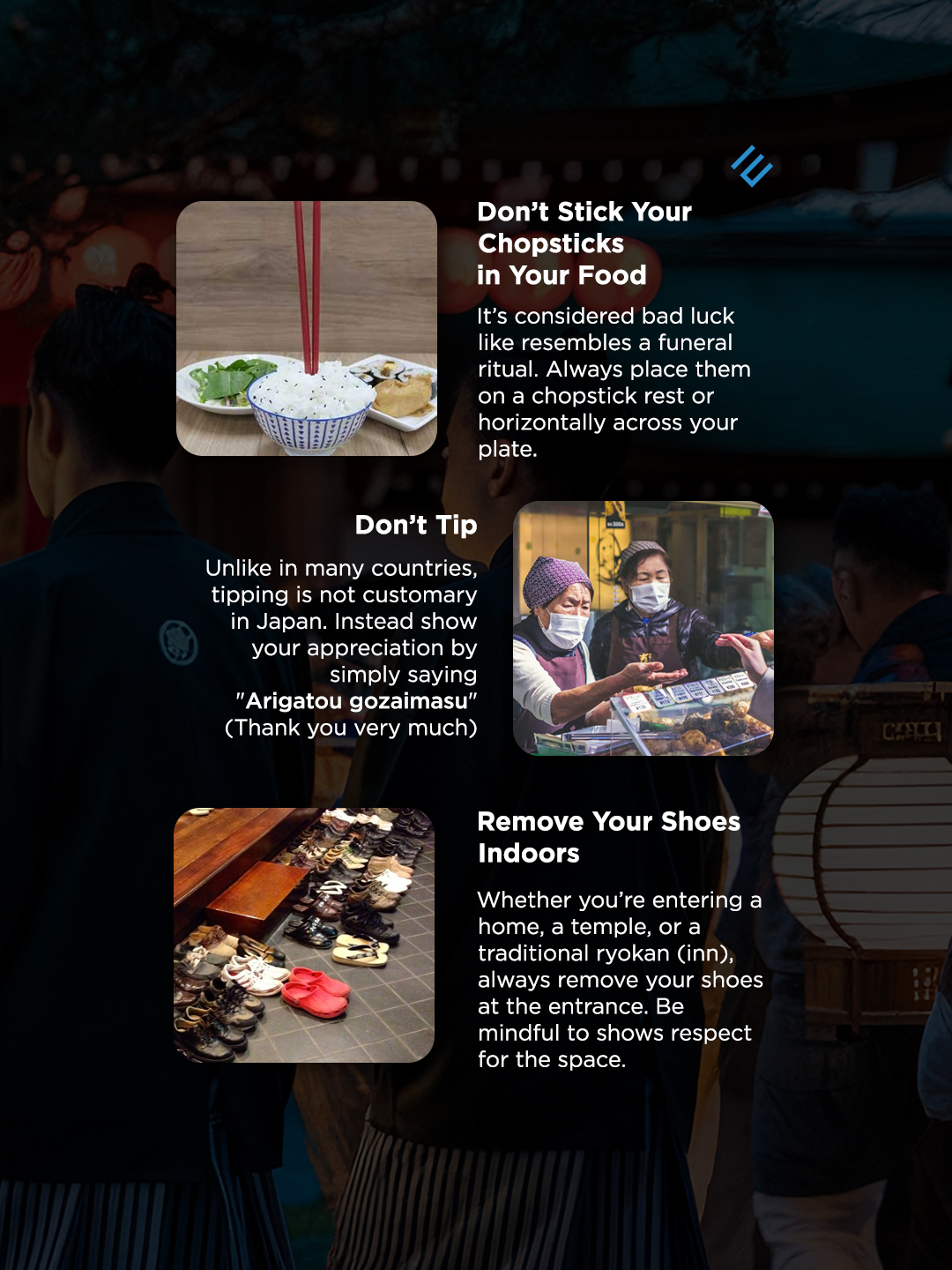
Don’t Stick Chopsticks in Your Food

Dining etiquette carries deep cultural meaning

The Cultural Significance

One of the most important dining rules in Japan is never sticking your chopsticks upright into a bowl of rice.

Why? Because this action resembles a funeral ritual where rice is offered to the deceased with chopsticks standing vertically.

Doing so at the dinner table is considered bad luck and inappropriate.

Proper Chopstick Placement

When not using your chopsticks:

  • Place them on a chopstick rest (hashioki)

  • Lay them horizontally across your plate or bowl

Avoid:

  • Passing food directly from chopsticks to chopsticks

  • Using chopsticks to point

Japanese dining etiquette reflects mindfulness and respect—not just for people, but for the food itself.

Don’t Tip

Gratitude looks different in Japan

Why Tipping Is Not Customary

In many countries, tipping is expected as a reward for good service. In Japan, however, tipping is not part of the culture.

Service workers take pride in delivering excellent hospitality without expecting extra payment. Leaving money on the table may even cause confusion or be politely returned.

How to Show Appreciation

Instead of tipping, express gratitude verbally by saying:

“Arigatou gozaimasu” (Thank you very much).

A sincere thank you and a polite bow carry more meaning than additional cash.

Understanding this difference prevents awkward moments and shows respect for local norms

Remove Your Shoes Indoors

Cleanliness and respect go hand in hand

When to Remove Shoes

In Japan, removing shoes before entering indoor spaces is common practice.

You will be expected to remove shoes when entering:

  • Private homes

  • Traditional inns (ryokan)

  • Certain restaurants

  • Temples and shrines

  • Some schools and historic buildings

Look for a designated area near the entrance called a “genkan,” where shoes are placed.

Why It Matters

The practice of removing shoes reflects:

  • Cleanliness

  • Respect for shared spaces

  • Cultural tradition

Indoor spaces are considered clean environments. Wearing outdoor shoes inside disrupts that boundary.

Often, slippers are provided. Follow local cues and place your shoes neatly to the side.

The Spirit Behind Japanese Etiquette

Japanese manners are rooted in a broader concept of wa, meaning harmony. The goal is not rigid perfection but consideration for others.

You’ll notice:

  • People speak softly in public transportation

  • Phones are kept on silent

  • Trash is disposed of carefully

These behaviors create an atmosphere of calm order—even in crowded cities.

As a visitor, adopting small gestures of awareness goes a long way.

Travel with Respect, Experience More

Visiting Japan becomes far more meaningful when you understand its social customs. Bowing, walking on the left, using chopsticks properly, refraining from tipping, and removing your shoes indoors may seem like small details—but they reflect deep cultural values.

Respect is at the heart of Japanese society.

When you approach your trip with curiosity and mindfulness, you don’t just see Japan—you connect with it.

And in return, you’ll find that Japan’s warmth, hospitality, and beauty feel even more rewarding.

Before you go, remember:
A little etiquette knowledge makes a big difference.

Safe travels—and enjoy discovering Japan the respectful way.
Thoughtfully Designed Journeys, Just for You

Start planning your thoughtfully designed journey with Axcell Travel Destination.

How Indonesians Can Apply for a Schengen Visa

A Step-by-Step Guide to Unlocking Your European Adventure

Planning a trip to Europe is exciting. From strolling along cobblestone streets in Paris to exploring historic landmarks in Rome or enjoying scenic canals in Amsterdam, the possibilities are endless. But before boarding your flight, Indonesian travelers must first secure one essential document: the Schengen Visa.

The Schengen Visa allows entry into 27 European countries within the Schengen Area, making it a convenient gateway for multi-country travel.

If you’re an Indonesian passport holder preparing for your European journey, here’s a simple and clear guide to help you navigate the application process with confidence.

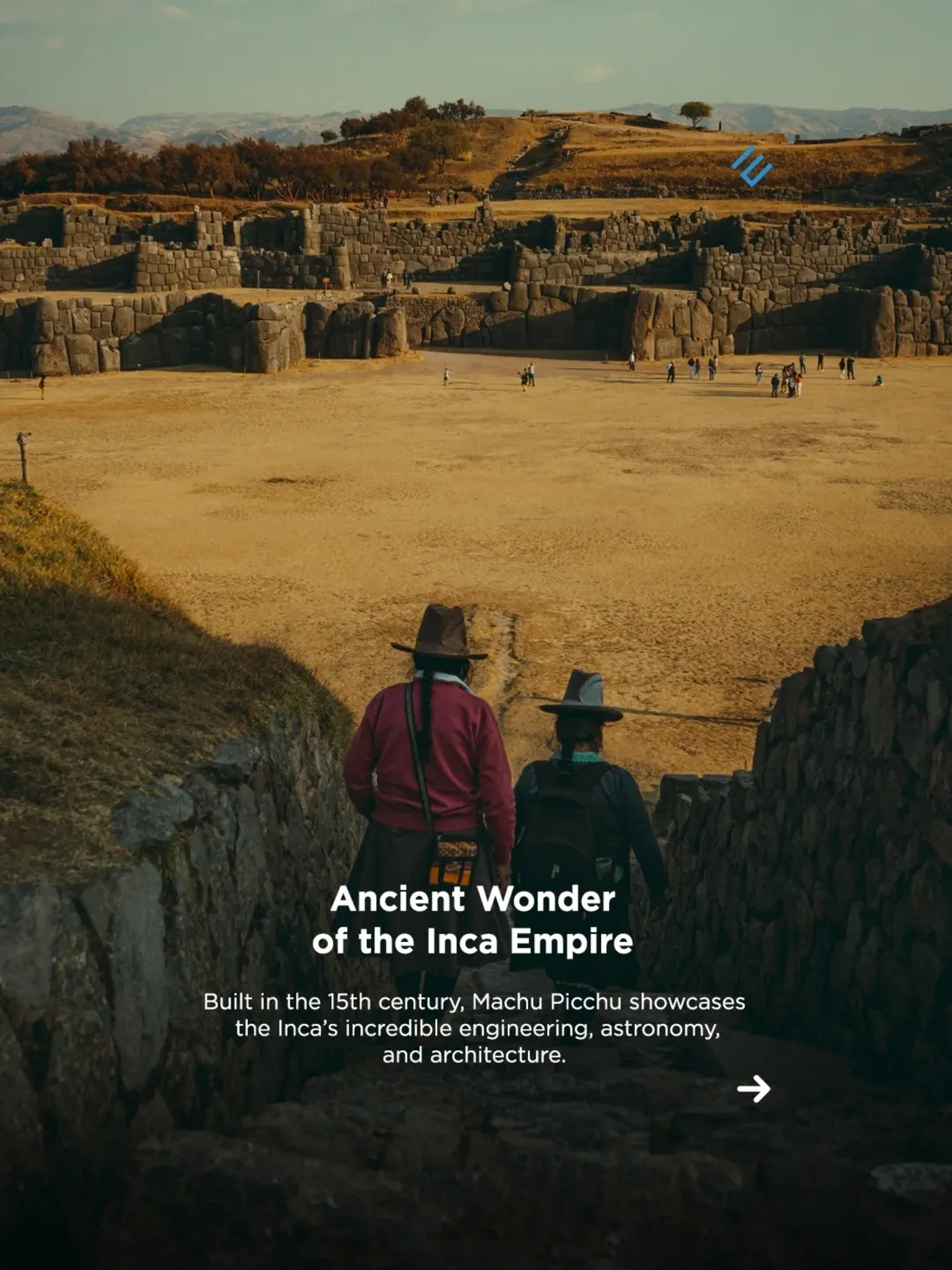
Machu Picchu
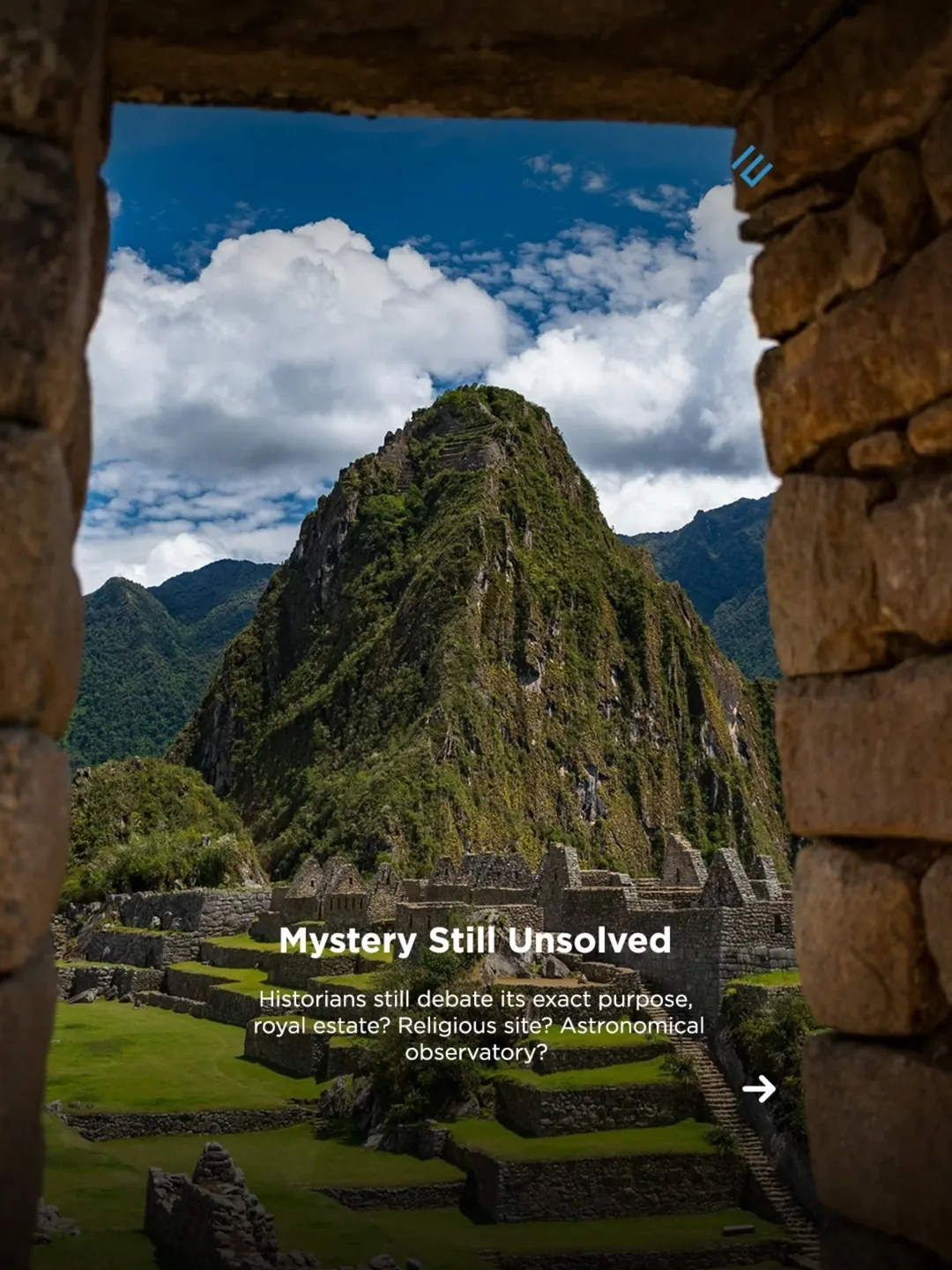
Machu Picchu
Machu Picchu
Machu Picchu

Understand the Schengen Visa Basics

What Is the Schengen Visa?

The Schengen Visa allows travelers to enter and move freely within participating European countries for a limited period. It eliminates the need to apply separately for each country within the Schengen zone.

For most Indonesian travelers, the relevant visa category is the Type C Short-Stay Visa, which allows stays of up to 90 days within a 180-day period.

Types of Schengen Visas

Before applying, determine the correct visa type for your purpose of travel.

Airport Transit Visa

For travelers who need to transit through an airport in the Schengen area without entering the country.

Note: Short transit visas have largely been replaced by Type C short-stay visas for transit purposes.

Type C Short-Stay Visa (Most Common)

This is the most popular option for Indonesians traveling for:

  • Tourism

  • Business trips

  • Family visits

  • Short courses or events

It allows stays of up to 90 days within 180 days.

Type C visas can be issued as:

  1. Single-entry visa – Enter once.

  2. Double-entry visa – Enter twice within validity.

  3. Multiple-entry visa (Recommended) – Enter multiple times within the validity period.

For frequent travelers or those visiting multiple countries, a multiple-entry visa offers greater flexibility.

Long-Stay Visa (More Than 90 Days)

If you plan to:

  • Study

  • Work

  • Reside long-term

You must apply for a national long-stay visa through the specific country of residence.

Gather the Required Documents

Essential Documents Checklist

Preparation is key. Ensure all documents are complete and accurate before booking your appointment.

1. Valid Passport

  • Minimum 6 months validity

  • At least two blank pages

2. Completed Visa Application Form

Fill out the official application form carefully. Ensure all details match your passport and travel plans.

For applicants under 18 years old, a Parental Consent Form is required.

3. Passport-Sized Photos

  • Size: 35 mm x 45 mm

  • White background

  • Recent photo

4. Travel Itinerary

Provide:

  • Flight reservation (round-trip)

  • Hotel bookings or accommodation details

  • Travel plan within Europe

This shows clear travel intentions.

5. Travel Insurance

Mandatory for the Schengen area.

Insurance must:

  • Cover at least €30,000

  • Include medical emergencies and repatriation

  • Be valid for all Schengen countries

6. Proof of Financial Stability

Submit recent:

  • Bank statements

  • Proof of income

  • Sponsorship letter (if applicable)

This demonstrates your ability to fund your trip.

Book Your Appointment

Schedule at the Correct Embassy or Visa Center

You must apply through:

  • The embassy/consulate of the country where you will spend the most time, or

  • The first country you enter if equal time is spent.

Most Schengen countries use official visa application centers such as VFS Global.

Apply Early

Tip: Apply 3–6 weeks before departure.

While processing generally takes around 15 working days, delays can occur during peak travel seasons.

Avoid last-minute stress by planning ahead.

Attend Your Visa Appointment

What Happens at the Appointment?

On your appointment day:

  • Submit your documents

  • Provide biometric data (fingerprints and photo)

  • Attend an interview if required

Biometric data is typically valid for five years, so repeat applicants may not need to provide fingerprints again if already registered.

Presentation Matters

Dress neatly and answer questions clearly and confidently. The interview is usually straightforward, focusing on:

  • Purpose of travel

  • Duration of stay

  • Financial capability

And yes—don’t forget your smile.

Professionalism leaves a positive impression.

Wait for Processing

How Long Does It Take?

Standard processing time is approximately 15 working days, though it may vary depending on:

  • The country of application

  • Seasonal demand

  • Individual case review

During this waiting period:

  • Finalize your itinerary

  • Prepare your packing list

  • Double-check accommodation bookings

Patience is part of the process.

Collect Your Visa

Once Approved

When notified, collect your passport and carefully review the visa details.

Check:

  • Your name spelling

  • Passport number

  • Visa validity dates

  • Number of entries granted

Ensure everything matches your travel plans before departure.

Preparing for Departure

Having your visa approved is a major milestone. Before flying:

  • Keep copies of important documents

  • Carry travel insurance proof

  • Bring accommodation confirmations

  • Be ready to answer questions at immigration

A Schengen visa allows travel across participating countries, but entry decisions remain at the discretion of border officers.

Stay calm, organized, and prepared.

Your European Journey Starts with Preparation

Applying for a Schengen visa may seem complex at first, but with careful planning and complete documentation, the process becomes manageable.

For most Indonesians, the Type C Tourist Visa is the gateway to exploring Europe’s rich history, architecture, cuisine, and culture.

From gathering documents to attending your appointment and collecting your visa, each step brings you closer to your European adventure.

Preparation builds confidence.
Organization reduces stress.
And soon enough, you’ll be walking through Europe’s most iconic cities.

Europe awaits—start your journey the right way.

Thoughtfully Designed Journeys, Just for You

Start planning your thoughtfully designed journey with Axcell Travel Destination.

April Weather Forecast for Popular Destinations

What to Expect Before You Pack Your Bags

April is one of the most dynamic months to travel. Across the globe, winter has faded, spring begins to bloom in many regions, and tropical destinations transition into warmer, sunnier days. It’s a month of contrast—mild cherry blossom mornings in East Asia, hot festival celebrations in Southeast Asia, and stylish spring strolls across Europe.

If you’re planning a trip this April, understanding the weather can help you pack smarter and enjoy your destination fully. From layered outfits to sunscreen essentials, preparation makes all the difference.

Here’s what you can expect in some of the most popular travel destinations this month.

JAPAN

Mild spring air and cherry blossom magic

Comfortable Temperatures for Exploration

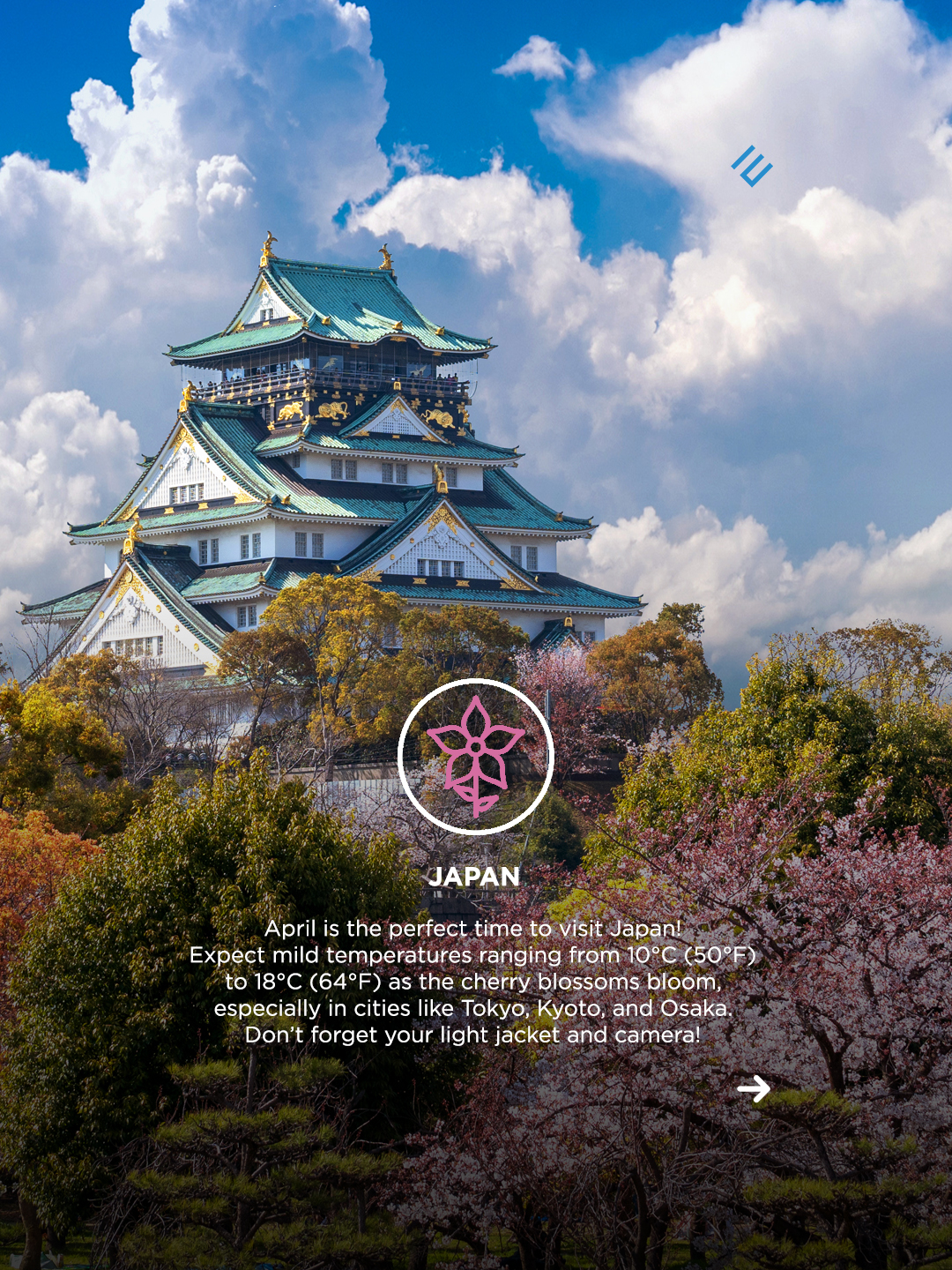
April is widely considered one of the best months to visit Japan. Temperatures typically range between 10°C (50°F) and 18°C (64°F), creating cool mornings and pleasantly mild afternoons.

In cities such as:

  • Tokyo

  • Kyoto

  • Osaka

spring is in full bloom. Cherry blossoms (sakura) paint parks and riversides in soft pink hues, attracting locals and visitors alike.

What to Pack

April weather in Japan can shift throughout the day. Mornings and evenings may feel crisp, while midday sun warms the air.

Essentials include:

  • A light jacket or cardigan

  • Comfortable walking shoes

  • Layered outfits

  • A compact umbrella for occasional spring showers

And of course—don’t forget your camera. The scenery is unforgettable.

Why April Feels Special

Beyond the blossoms, April in Japan carries a sense of renewal. Schools and businesses begin new terms, and the country feels energized by fresh starts. It’s a beautiful blend of seasonal beauty and cultural vibrancy.

THAILAND

Heat, sunshine, and the ultimate water festival

Expect High Temperatures

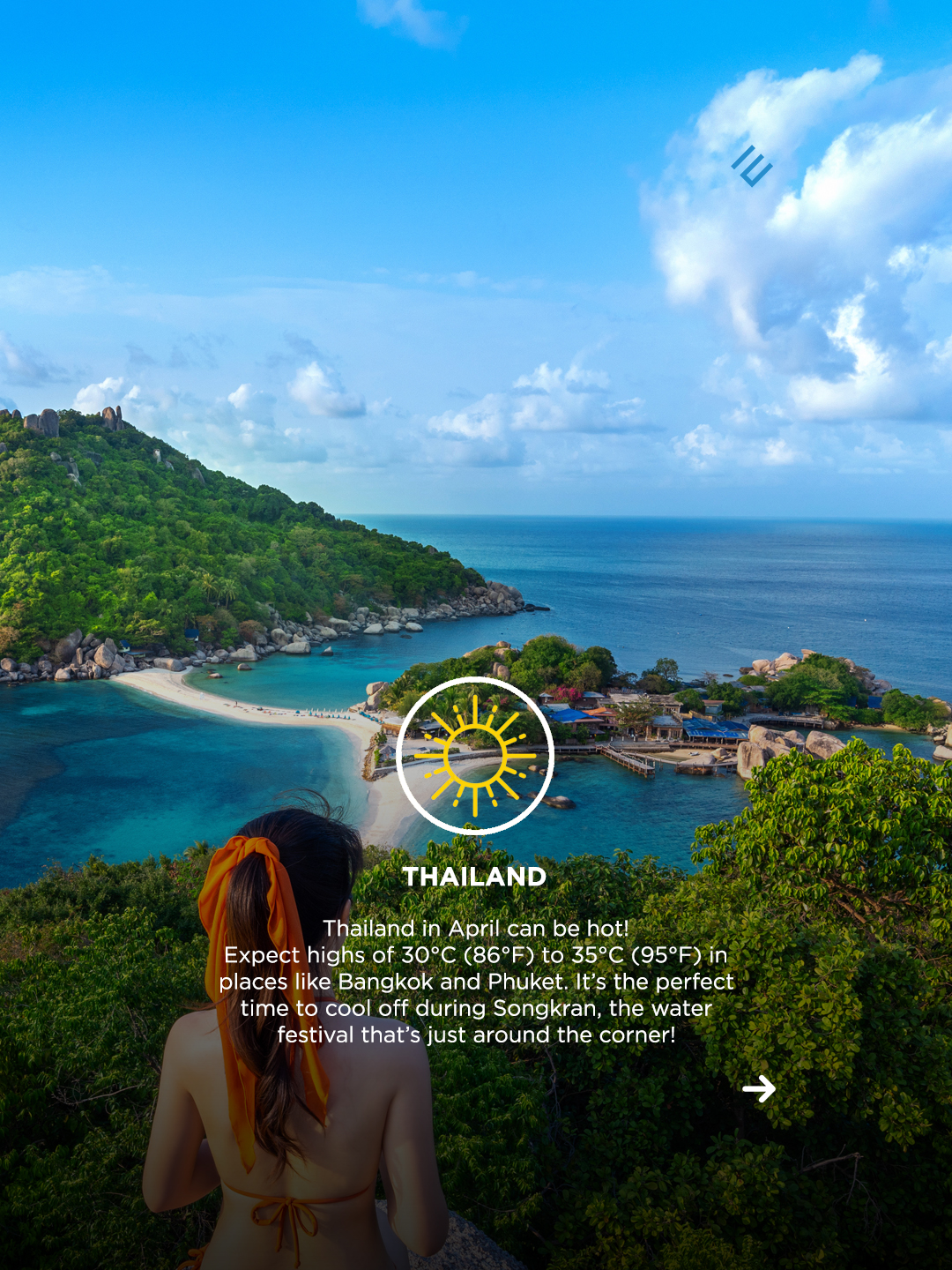
In Thailand, April is one of the hottest months of the year. Daytime highs often reach 30°C (86°F) to 35°C (95°F) in cities like:

  • Bangkok

  • Phuket

The sun is strong, humidity can be intense, and hydration becomes essential.

A Perfect Time for Songkran

Despite the heat, April is incredibly exciting because it coincides with Songkran, Thailand’s famous water festival.

Massive water fights across the country provide the perfect way to cool off. What might feel like scorching weather becomes part of the fun as streets transform into playful splash zones.

What to Pack

For Thailand in April:

  • Light, breathable clothing

  • Sunglasses and sunscreen

  • A hat for sun protection

  • A reusable water bottle

Plan outdoor activities early in the morning or after sunset to avoid peak heat hours.

EUROPE (France, Italy, Spain)

Spring elegance with occasional showers

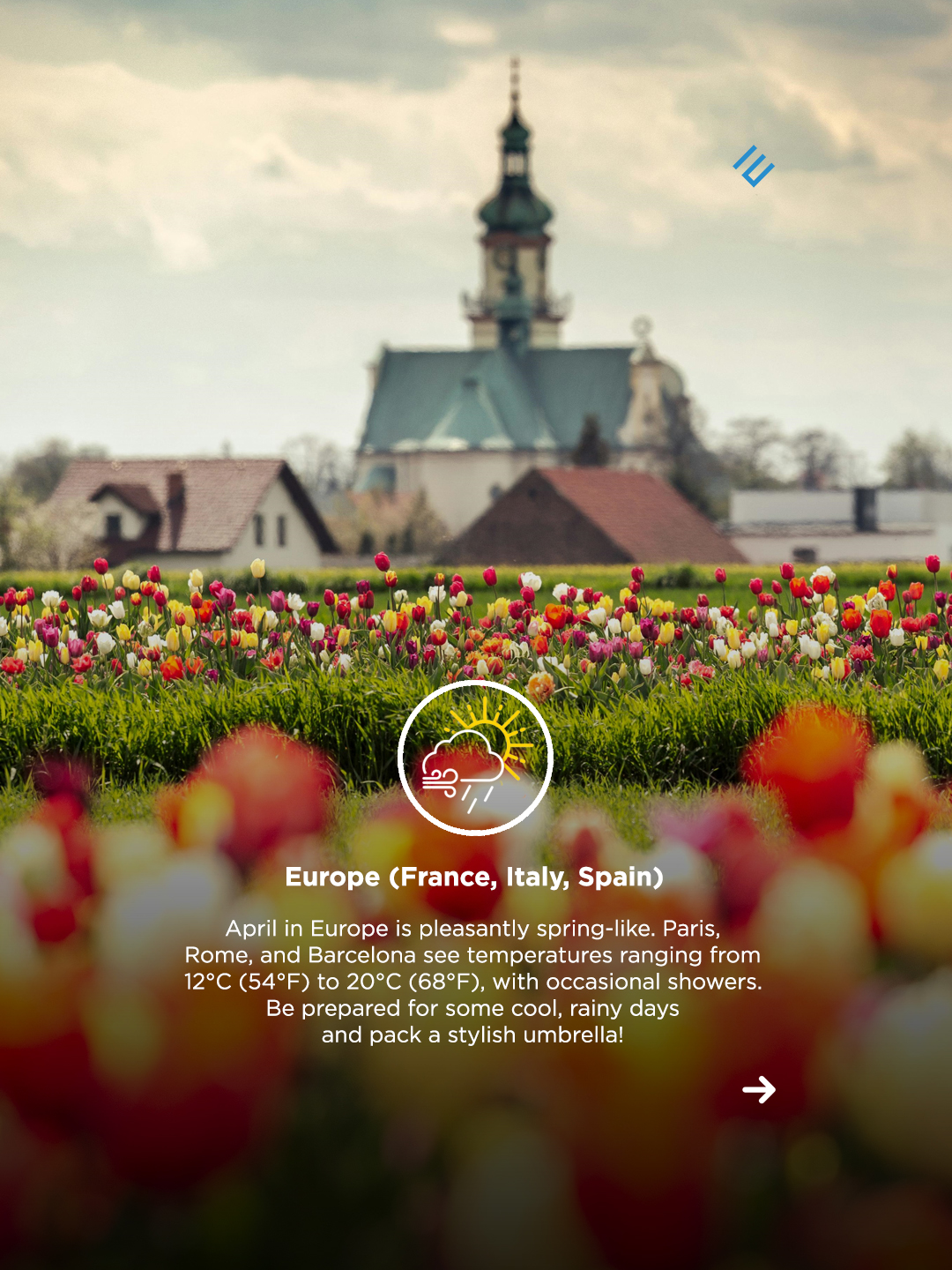
April in Western and Southern Europe offers comfortable, spring-like weather—ideal for sightseeing without summer crowds.

France

In France, particularly Paris, temperatures range from 12°C (54°F) to 18°C (64°F).

Spring blossoms line boulevards, outdoor cafés reopen, and parks begin to fill with life. Occasional rain showers are common, so packing a stylish umbrella is wise.

Italy

In Italy, cities like Rome enjoy temperatures around 13°C (55°F) to 20°C (68°F).

April is perfect for exploring historical landmarks without the intense heat of summer. Layered outfits are ideal for fluctuating daytime and evening temperatures.

Spain

In Spain, destinations like Barcelona see similar mild spring conditions.

The atmosphere feels lively yet relaxed. Outdoor sightseeing, walking tours, and seaside strolls are comfortable during this time of year.

What to Pack for Europe

  • Light sweaters or jackets

  • Comfortable walking shoes

  • Umbrella or raincoat

  • Versatile layers

April in Europe balances charm with unpredictability—sunshine one moment, light rain the next.

VIETNAM

Warm days with regional contrasts

Southern Sunshine

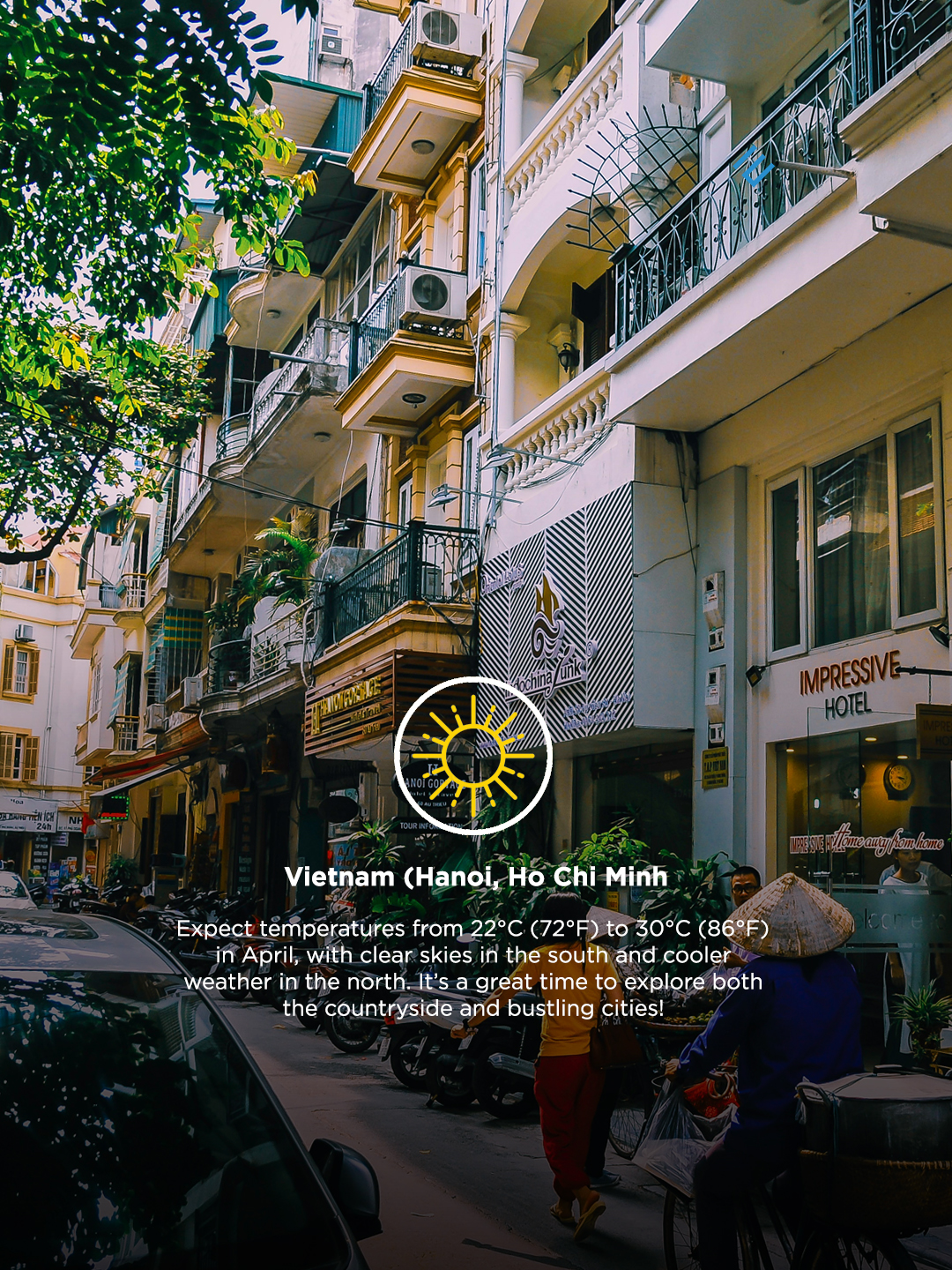
In southern Vietnam, including Ho Chi Minh City, April brings warm temperatures between 25°C (77°F) and 30°C (86°F).

Skies are generally clear, making it an excellent time to explore markets, river tours, and urban attractions.

Cooler Northern Weather

In the north, particularly Hanoi, temperatures are slightly cooler, ranging from 22°C (72°F) to 28°C (82°F).

The weather is pleasant for exploring historic districts, countryside landscapes, and cultural sites.

Why April Is Ideal

Vietnam’s regional diversity means you can experience multiple climates within one trip. April provides a comfortable balance before the peak of the rainy season in many areas.

April - A Month of Perfect Transitions

April is a month of movement and renewal. Cherry blossoms bloom in Japan, water festivals splash across Thailand, European cities awaken in spring elegance, and Vietnam offers warm yet manageable temperatures.

Each destination carries its own climate personality—but all offer memorable experiences.

The key to enjoying April travel is preparation:

  • Layer wisely in cooler climates.

  • Stay hydrated in tropical heat.

  • Embrace occasional rain in Europe.

When you understand the weather, you travel smarter.

And sometimes, the best journeys happen in transitional seasons—when destinations are alive with change, color, and possibility.

Thoughtfully Designed Journeys, Just for You

Start planning your thoughtfully designed journey with Axcell Travel Destination.

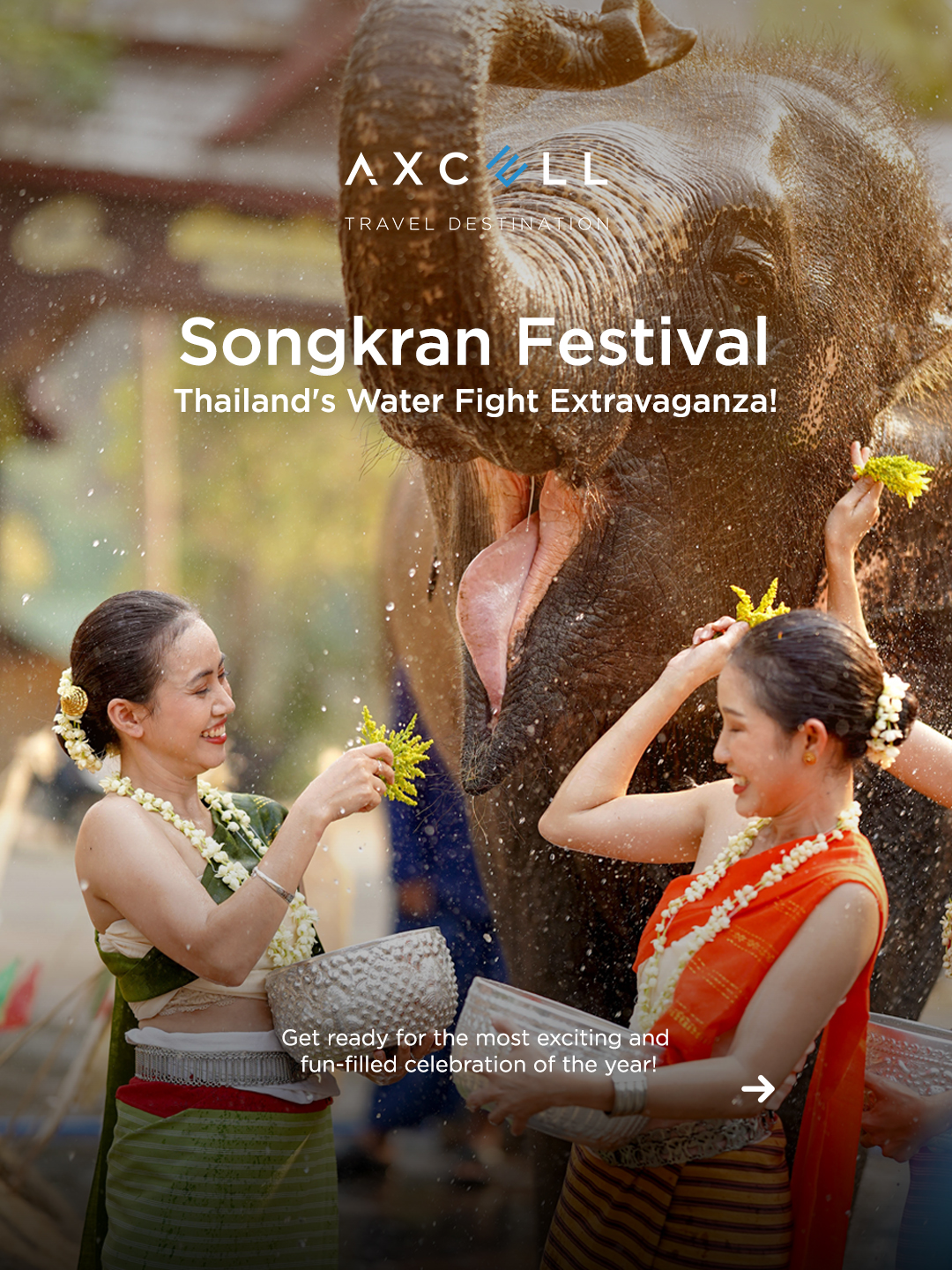
Songkran Festival

Thailand’s Water Fight Extravaganza and a Joyful New Beginning

If you’ve ever wanted to celebrate New Year with sunshine, laughter, and a nationwide water fight, then Songkran in Thailand is the festival for you.

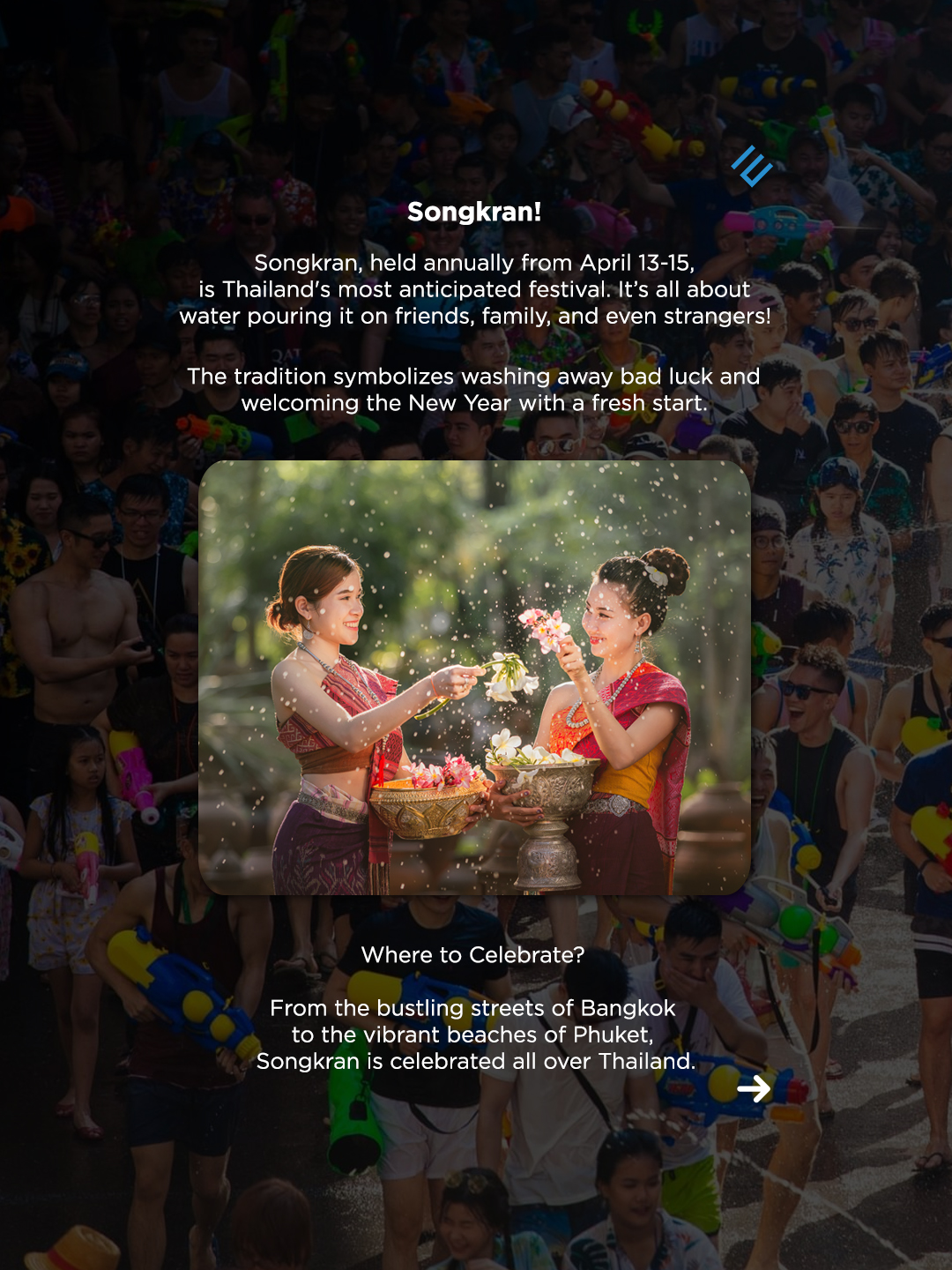
Held annually from April 13–15, Songkran marks the Thai New Year. While internationally famous for its epic water battles, the festival’s roots are deeply cultural and spiritual. Beneath the splashing buckets and water guns lies a tradition centered on cleansing, renewal, and respect.

Songkran is not just about getting wet—it’s about starting fresh.

Let’s dive into what makes this celebration one of the most exciting and meaningful festivals in the world.

The Meaning Behind the Splash

More than just a water fight

A Symbol of Renewal

Traditionally, water in Songkran represents purification. Gently pouring water over elders’ hands or Buddha statues symbolizes washing away misfortune and welcoming good luck for the year ahead.

Over time, this symbolic gesture evolved into large-scale water celebrations across cities—but the core meaning remains the same: renewal.

Water becomes a joyful reminder that every year offers a fresh start.

Respect and Reverence

Before the playful chaos begins, many Thai families:

  • Visit temples

  • Offer food to monks

  • Clean their homes

  • Participate in merit-making ceremonies

Buddha statues are carefully washed with scented water, and elders are honored through respectful water pouring rituals.

Songkran balances spirituality and celebration beautifully.

Where to Celebrate Songkran

From buzzing cities to beachside parties

Bangkok – Urban Energy at Its Peak

In Bangkok, Songkran transforms the city into a massive water playground. Major streets close to traffic, and crowds armed with water guns fill the roads.

Popular areas like Khao San Road and Silom become hubs of celebration. Music blares, laughter echoes, and strangers quickly become teammates in friendly splash battles.

Bangkok offers high-energy excitement for those who want to experience the festival at full volume.

Phuket – Beachside Festivities

If you prefer tropical scenery, Phuket combines beach vibes with festival fun.

Here, Songkran unfolds along coastal roads and beachfront areas. The ocean breeze mixes with splashes of water, creating a vibrant yet slightly more relaxed atmosphere compared to the capital.

It’s a perfect blend of holiday escape and cultural celebration.

Nationwide Celebration

Beyond major tourist destinations, Songkran is celebrated across villages and towns throughout Thailand. Smaller communities often host parades, cultural performances, and traditional ceremonies.

No matter where you are in Thailand during April 13–15, you’ll feel the festive spirit.

Tips for Enjoying Songkran

Stay prepared while embracing the fun

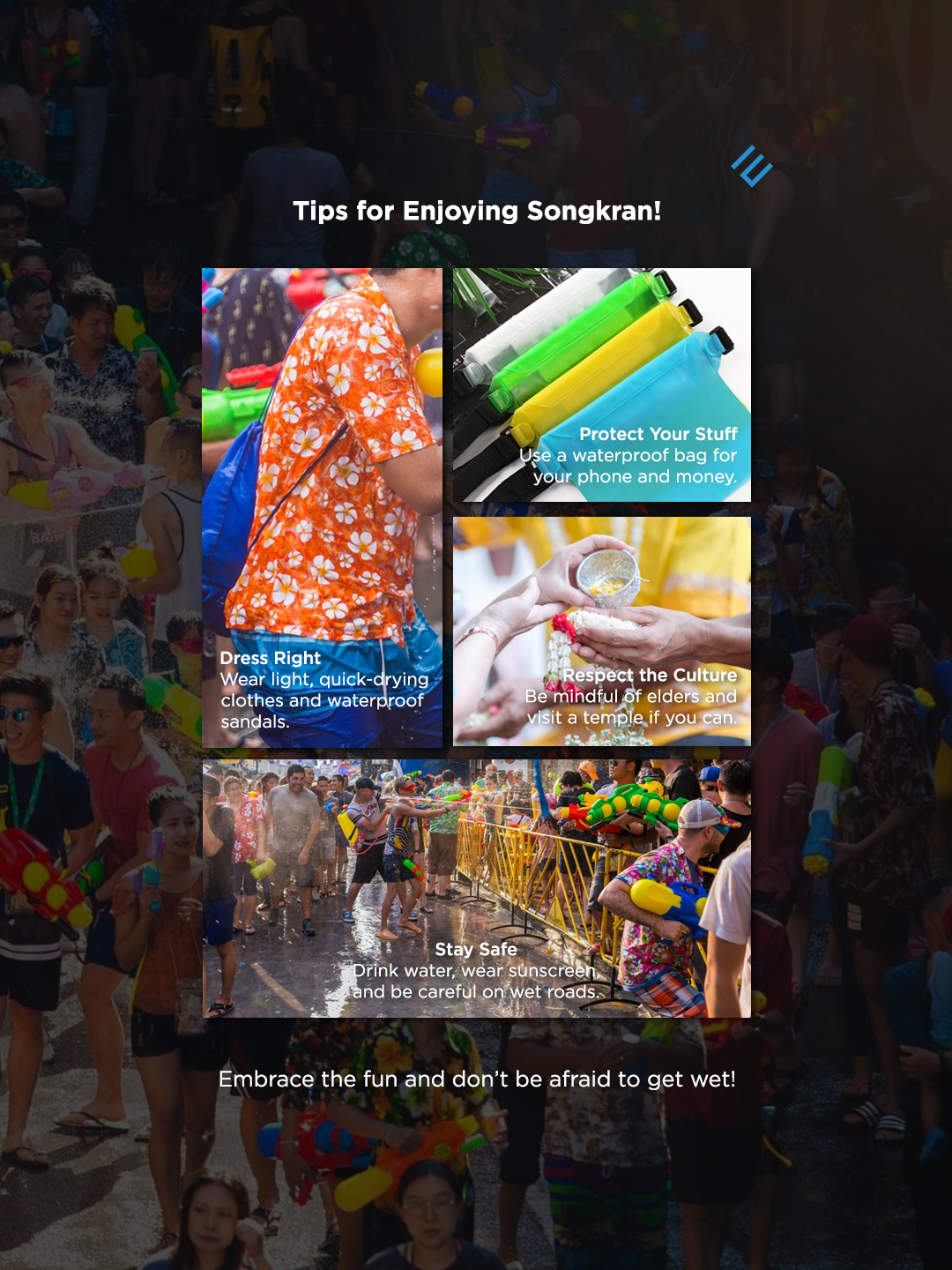
Protect Your Stuff

You will get wet. There is no avoiding it.

To protect your belongings:

  • Use a waterproof bag or pouch

  • Keep phones sealed in plastic cases

  • Carry minimal cash

  • Avoid bringing unnecessary valuables

Waterproof protection ensures your fun isn’t interrupted by damaged electronics.

Dress Right

Comfort matters during Songkran. Wear:

  • Light, quick-drying clothes

  • Waterproof sandals or secure footwear

  • Sunglasses for eye protection

Avoid heavy fabrics and slippery shoes. The streets can become wet and crowded, so practical attire keeps you comfortable.

Respect the Culture

While water fights dominate headlines, Songkran remains a sacred celebration for many Thai families.

Be mindful by:

  • Showing respect to elders

  • Avoiding aggressive splashing

  • Dressing modestly when visiting temples

  • Participating in traditional rituals when possible

Taking time to visit a temple adds depth to your experience beyond the party atmosphere.

Stay Safe

April in Thailand is hot. Between the tropical heat and constant activity, hydration is crucial.

Remember to:

  • Drink plenty of water

  • Apply sunscreen regularly

  • Be cautious on wet roads

  • Avoid reckless behavior

Balancing excitement with awareness ensures a joyful and safe celebration.

Embrace the Spirit of Fun

Let go and join the celebration

Songkran is one of the rare festivals where spontaneity thrives. Strangers splash strangers. Laughter replaces formalities. Cultural barriers dissolve.

The moment you step outside, someone may gently splash water on you—and you’ll find yourself smiling back.

There’s something liberating about collective playfulness.

It reminds us that celebration doesn’t need to be complicated. Sometimes, happiness is as simple as water and sunshine.

Why Songkran Feels So Special

What makes Songkran extraordinary is its balance.

It is:

  • Spiritual yet playful

  • Respectful yet energetic

  • Traditional yet modern

It welcomes locals and visitors alike to share in renewal and joy.

Few festivals invite you so fully into participation. You’re not just observing—you’re involved.

A New Year Like No Other

Songkran is more than Thailand’s Water Fight Extravaganza. It’s a celebration of cleansing the past, embracing the present, and stepping confidently into the future.

From temple rituals to lively street celebrations in Bangkok and Phuket, the festival offers experiences that range from reflective to exhilarating.

If you’re ready to welcome a New Year in the most refreshing way possible, Songkran might just be the unforgettable adventure you’ve been looking for.

So pack your waterproof bag, wear your lightest clothes, and step into the streets.

Embrace the laughter.
Respect the tradition.
And don’t be afraid to get wet

Thoughtfully Designed Journeys, Just for You

Start planning your thoughtfully designed journey with Axcell Travel Destination.

Lebaran Dishes from Different Countries

A Culinary Journey Through Eid Traditions Around the World

Lebaran—also known globally as Eid al-Fitr—marks the joyful end of Ramadan. After a month of fasting, reflection, and discipline, families gather to celebrate with prayers, forgiveness, and of course, extraordinary food.

Across continents, Eid tables reflect local culture, history, and flavor. While the spirit of the celebration remains the same—gratitude, generosity, and togetherness—the dishes vary beautifully from country to country.

From syrup-soaked pastries in Turkey to coconut-infused rice in Southeast Asia, here’s a delicious journey through Lebaran dishes around the world.

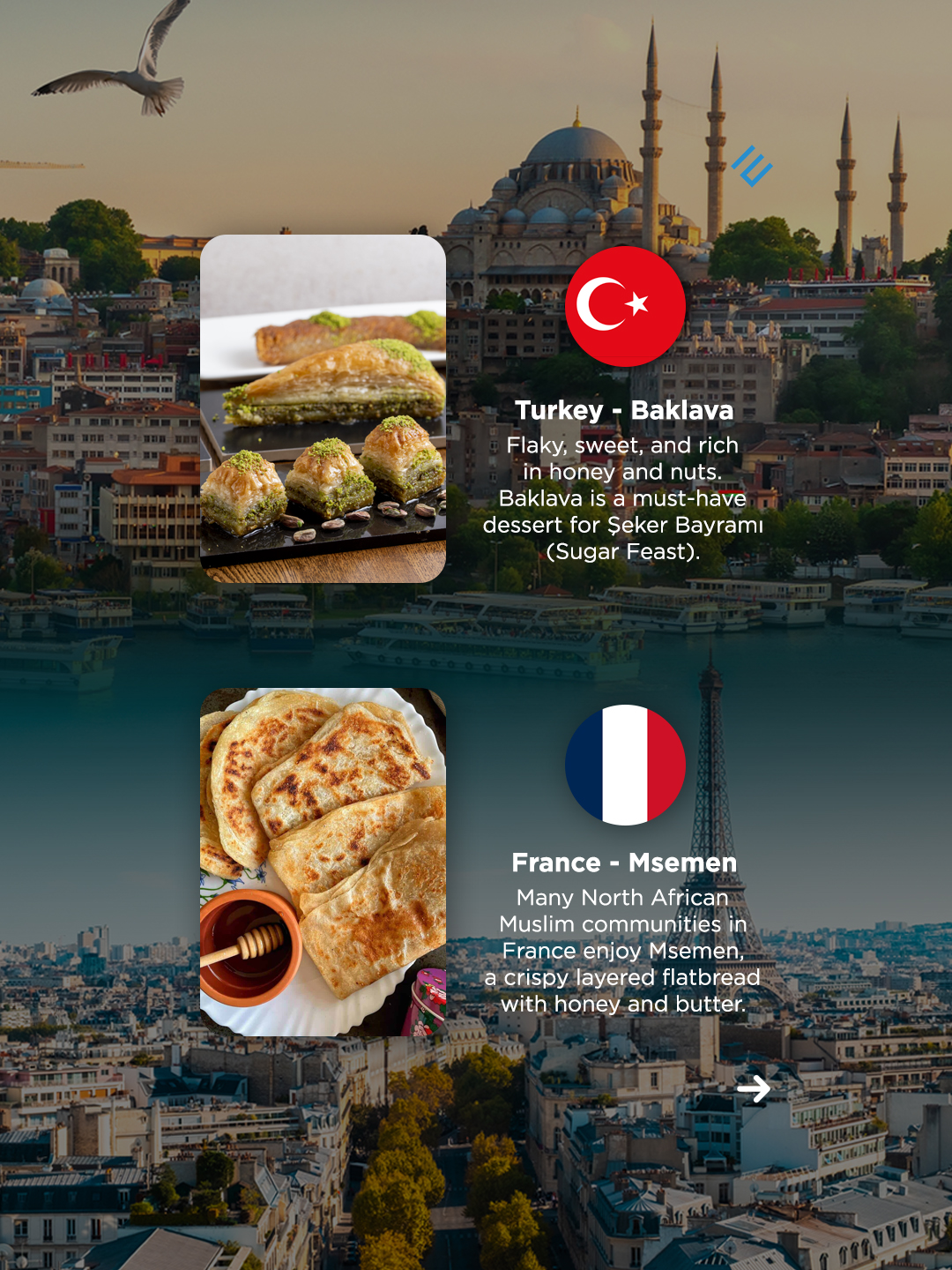
Turkey | Baklava

Sweet layers for Şeker Bayramı

In Turkey, Eid al-Fitr is often called Şeker Bayramı, meaning “Sugar Feast.” The name itself reflects the importance of sweets in the celebration.

At the heart of the dessert table sits baklava—a rich, flaky pastry layered with chopped nuts and drenched in fragrant honey or sugar syrup.

Layers of History

Baklava has deep roots in Ottoman cuisine and is closely associated with hospitality and generosity. Its delicate layers of filo dough represent craftsmanship and patience—qualities celebrated during Ramadan.

On Eid morning, families prepare trays of baklava to serve guests who visit throughout the day. Sharing sweets symbolizes spreading joy after a month of spiritual discipline.

Flavor Profile

Baklava is:

  • Flaky and crisp

  • Rich with pistachios or walnuts

  • Sweetened with honey or syrup

  • Lightly perfumed with rosewater or orange blossom

Every bite feels celebratory—perfectly fitting for a day of gratitude.

France | Msemen

A North African favorite in European homes

In France, many Muslim communities trace their heritage to North Africa. During Eid, traditional dishes from Morocco, Algeria, and Tunisia fill French kitchens.

One beloved item is msemen—a layered, square-shaped flatbread that is both crispy and soft.

Simple Yet Meaningful

While not as visually elaborate as baklava, msemen’s comfort lies in its simplicity. Paired with mint tea or coffee, it turns Eid morning into a warm and intimate gathering.

A Breakfast Tradition

Msemen is often enjoyed for Eid breakfast, served warm with honey and butter. The preparation involves folding dough multiple times to create thin, flaky layers.

It represents:

  • Warm hospitality

  • Family cooperation in the kitchen

  • The blending of cultures

In France, msemen beautifully reflects how migration shapes culinary traditions.

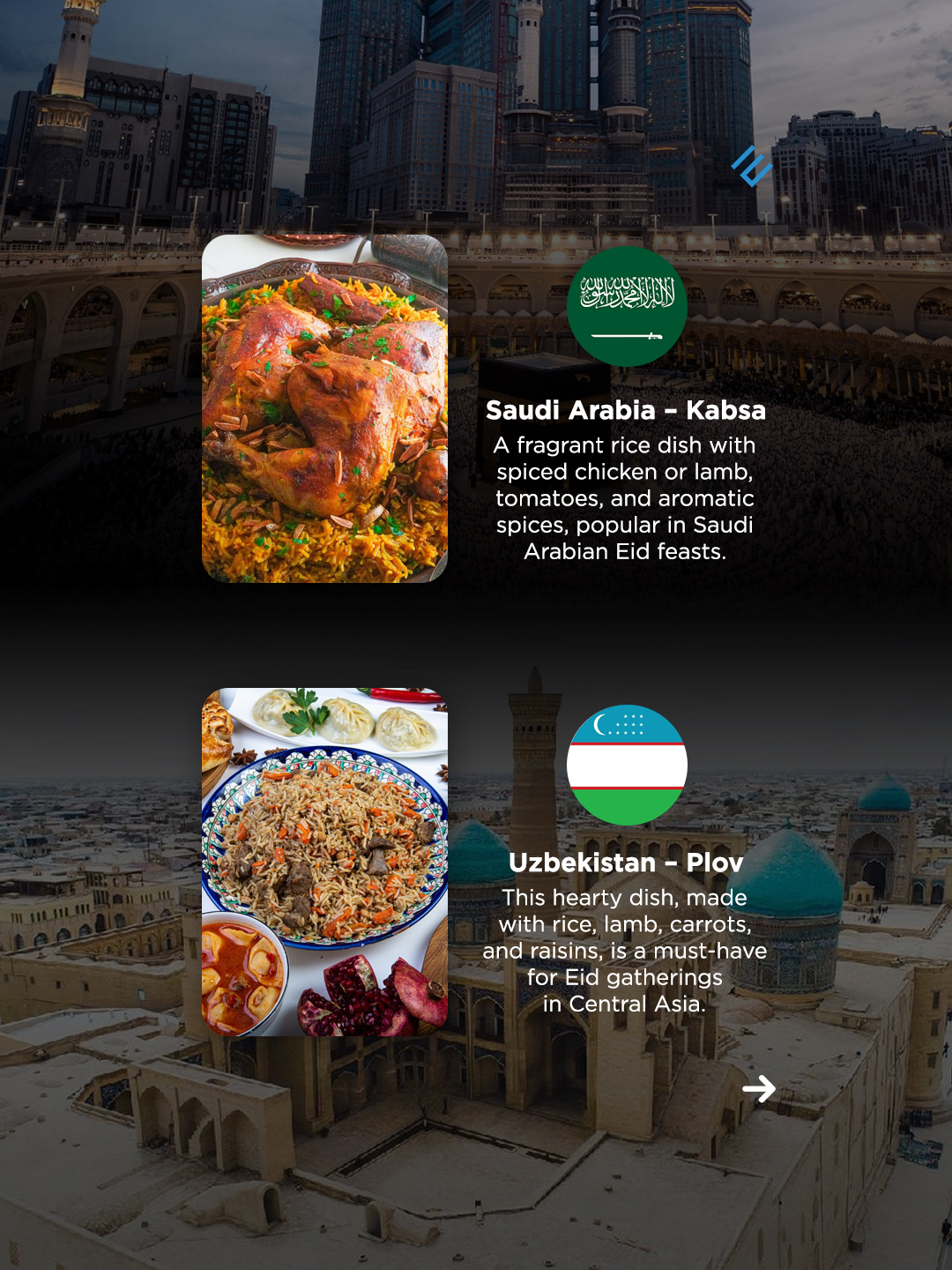
Saudi Arabia | Kabsa

Aromatic rice at the heart of celebration

In Saudi Arabia, Eid feasts are centered around kabsa—a fragrant rice dish layered with spiced chicken or lamb.

Kabsa is more than food; it’s a communal experience.

Symbol of Generosity

Serving kabsa reflects abundance and hospitality. During Eid, families prepare generous portions to welcome relatives and neighbors.

In Saudi culture, sharing kabsa reinforces unity and gratitude.

A Feast for Gathering

Large platters of kabsa are placed at the center of the table, encouraging shared dining. The dish combines:

  • Long-grain rice

  • Tomatoes

  • Cinnamon, cardamom, and cloves

  • Tender meat

The aroma alone fills homes with warmth and anticipation.

Uzbekistan | Plov

A Central Asian celebration staple

In Uzbekistan, no Eid gathering is complete without plov—a hearty rice dish cooked with lamb, carrots, onions, and sometimes raisins.

Plov is deeply woven into Uzbek identity.

Cooked with Care

Traditionally prepared in a large cauldron called a kazan, plov requires attention and skill. The rice absorbs flavors from spices and meat, creating a rich yet balanced dish.

During Eid, plov is served generously to guests, neighbors, and community members.

Community in Every Spoonful

In many Uzbek communities, preparing plov becomes a group effort. The cooking process itself strengthens bonds, turning the meal into both nourishment and celebration.

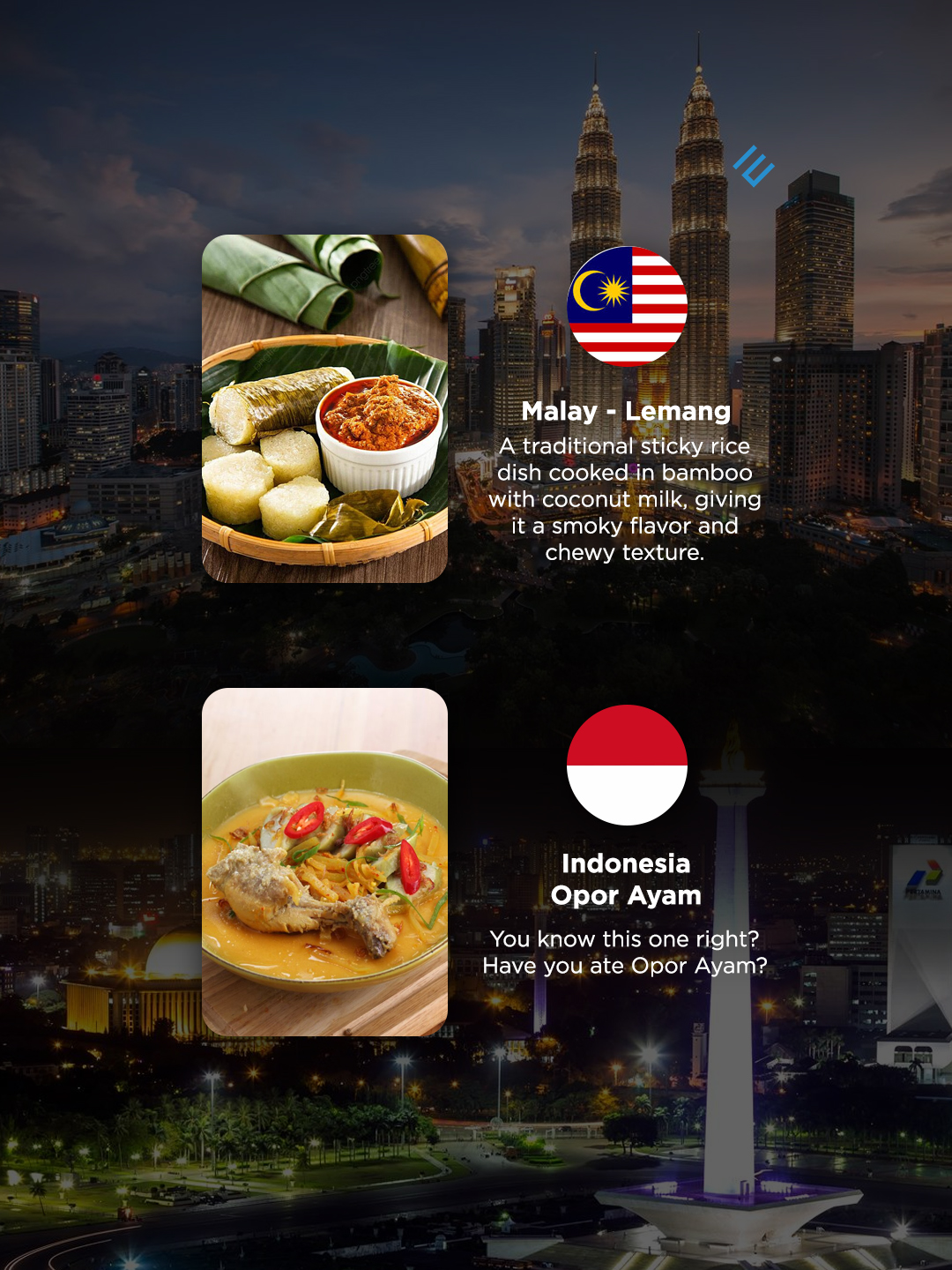
Malay Tradition | Lemang

Sticky rice with smoky character

Across Malaysia and parts of Southeast Asia, lemang is a signature Lebaran dish. Made from glutinous rice mixed with coconut milk, it is cooked inside hollow bamboo stalks over an open fire.

The result? A chewy, fragrant rice cake with a subtle smoky flavor.

Nature Meets Tradition

The bamboo cooking method gives lemang its unique taste and texture. The preparation process often happens outdoors, with family members taking turns rotating bamboo tubes over the fire.

Lemang is typically paired with savory dishes like rendang, balancing sweet coconut richness with spiced meat.

Indonesia | Opor Ayam

The taste of home

In Indonesia, one dish instantly signals Lebaran: opor ayam.

This creamy chicken dish, simmered in coconut milk and aromatic spices, is often served with ketupat (rice cakes wrapped in woven palm leaves).

Familiar and Comforting

Opor ayam combines:

  • Tender chicken

  • Coconut milk

  • Lemongrass

  • Galangal

  • Turmeric

The flavor is mild yet deeply comforting—perfect for large family gatherings.

For many Indonesians, Eid doesn’t feel complete without opor ayam on the table.

Have you eaten opor ayam yet this Lebaran?

A Global Celebration Through Food

Despite geographic differences, these dishes share common themes:

  • Hospitality

  • Generosity

  • Togetherness

  • Gratitude

Each culture expresses Eid joy through local ingredients and culinary traditions.

From flaky baklava to fragrant kabsa, hearty plov to creamy opor ayam, food becomes a language that transcends borders.

One Celebration, Many Flavors

Lebaran is not just a religious holiday—it’s a celebration of unity. Though languages, landscapes, and spices differ, the spirit of Eid remains universal.

Every dish tells a story:

  • Of heritage preserved

  • Of family gathered

  • Of gratitude expressed

Exploring Lebaran dishes from different countries reminds us that while traditions may vary, the joy of sharing a meal binds communities together worldwide.

Wherever you are celebrating, may your table be full, your heart grateful, and your Eid filled with blessings.

Thoughtfully Designed Journeys, Just for You

Start planning your thoughtfully designed journey with Axcell Travel Destination.

Bali’s One Day Digital Detox

A Travel Experience Like No Other

In a world that never stops scrolling, refreshing, and notifying, silence has become rare. We wake up to alarms on our phones, check emails before breakfast, scroll through social feeds between tasks, and fall asleep to glowing screens. Even while traveling—perhaps especially while traveling—we document, upload, and respond in real time.

But once a year, on the island of Bali, everything stops.

During Nyepi, Bali’s sacred Day of Silence, the island disconnects—literally. The airport closes. Streets empty. Businesses shut down. Even mobile networks and internet services are paused for 24 hours.

No flights.
No traffic.
No notifications.

Just stillness.

For travelers, Nyepi offers something almost impossible to find in modern life: a complete digital detox—enforced not by willpower, but by tradition.

Understanding Nyepi

The Meaning Behind the Day

Nyepi marks the Balinese New Year in the Saka calendar. Unlike loud countdown celebrations elsewhere, this new year begins with introspection. The day is dedicated to self-reflection, purification, and spiritual reset.

Four main restrictions define Nyepi:

  • No fire or lights (Amati Geni)

  • No working (Amati Karya)

  • No entertainment (Amati Lelungan)

  • No travel (Amati Lelungan)

Even tourists are asked to respect these customs by remaining inside their accommodations.

The result? An entire island collectively choosing pause.

An Island Without Noise

Imagine stepping outside and hearing no motorbikes. No car horns. No construction. No aircraft overhead.

The silence is profound.

At night, without city lights, the sky reveals stars rarely visible in busy destinations. The Milky Way stretches clearly above beaches and rice fields. The absence of artificial glow transforms the atmosphere into something ancient and sacred.

Nyepi is not simply quiet—it’s transformative.

Arrive Early - Witness the Ogoh-Ogoh Parade

The Night Before Silence

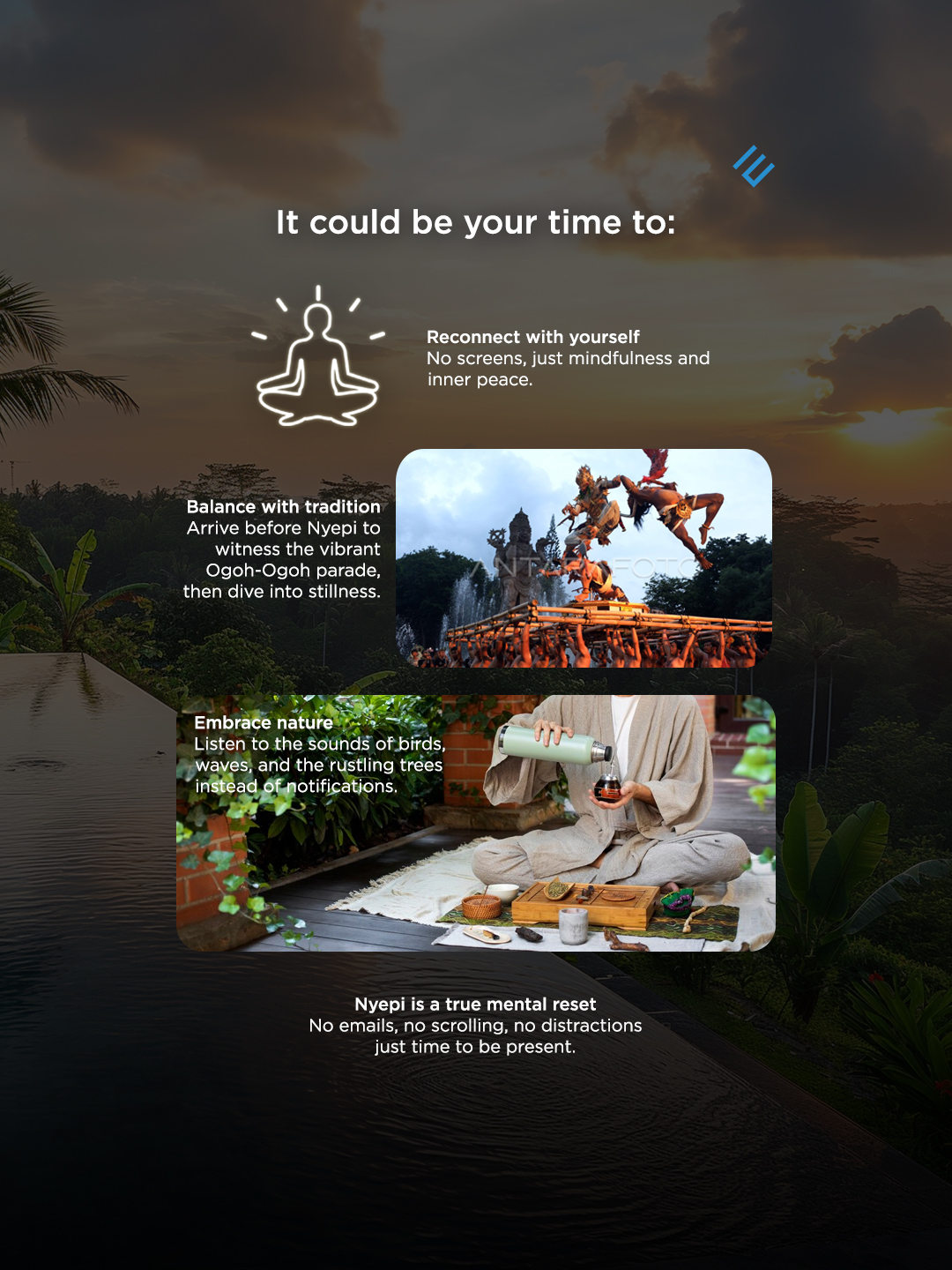
Before Nyepi arrives, Bali bursts with energy during the Ogoh-Ogoh parade. Giant papier-mâché effigies representing mythological demons are carried through villages in colorful processions. Music, fire, chanting, and community spirit fill the streets.

These dramatic figures symbolize negative energies and spiritual impurities. At the end of the night, many are ceremonially burned—cleansing the island before entering the Day of Silence.

A Powerful Contrast

Experiencing Ogoh-Ogoh before Nyepi creates emotional contrast.

One evening:

  • Drums echo through the streets.

  • Flames flicker against dark skies.

  • Communities gather in celebration.

The next day:

  • Complete stillness.

  • Empty roads.

  • Silent beaches.

This shift from intensity to tranquility amplifies the impact of Nyepi. It becomes more than a quiet day—it becomes a journey from release to renewal.

Reconnect With Yourself

A Forced Digital Detox

During Nyepi, internet providers shut down mobile data across Bali. Notifications disappear. Emails stop arriving. Social media updates pause.

At first, this may feel uncomfortable.

We instinctively reach for our phones—only to remember there’s nothing to check.

Gradually, something changes.

Without screens competing for attention, your awareness expands. You notice the rhythm of your breath. The texture of wind against your skin. The sound of distant waves.

Silence becomes spacious rather than empty.

Mindfulness Without Effort

Unlike self-imposed digital detoxes, Nyepi removes temptation entirely. You don’t need discipline; the infrastructure simply doesn’t function.

This creates a rare opportunity:

  • Journal without interruption.

  • Meditate without alerts.

  • Reflect on personal goals.

  • Read without distraction.

The absence of digital noise creates mental clarity.

Embrace Nature’s Subtle Sounds

The Language of Birds and Waves

Without engines and crowds, nature’s sounds become amplified.

  • Birds call more clearly.

  • Leaves rustle distinctly.

  • Ocean waves feel closer.

Even urban areas feel transformed. The environment seems to breathe differently.

A Sky Without Light Pollution

One of Nyepi’s most extraordinary gifts is the night sky. With lights minimized across the island, stargazing becomes breathtaking.

The darkness feels deeper. The constellations sharper.

In a world where artificial brightness dominates, experiencing true night becomes unforgettable.

Balance With Tradition

Respecting culture while finding personal meaning

Participating as a Guest

Traveling during Nyepi requires preparation. Visitors must:

  • Remain inside hotels or villas.

  • Keep lights dim.

  • Avoid outdoor activities.

But this restriction is not limiting—it’s immersive. You become part of the island’s spiritual rhythm.

A Collective Pause

What makes Nyepi extraordinary is its collective nature. Millions of residents participate simultaneously.

Imagine an entire island choosing silence together.

This shared discipline creates powerful energy—a reminder that community values can shape experience.

Why Nyepi Feels Like a True Mental Reset

In modern life, silence is rare. Even vacations can feel overstimulating—packed itineraries, constant photography, social sharing.

Nyepi removes all of that.

No emails.
No scrolling.
No external pressure.

Just time to exist without performance.

It becomes a mental reset not because you travel somewhere new—but because you temporarily disconnect from everything familiar.

The Luxury of Stillness

Bali offers beaches, temples, surf breaks, and rice terraces. But Nyepi offers something deeper: stillness.

In that stillness, you rediscover simplicity.

You realize how often your mind is pulled in multiple directions. You notice how silence feels at first unfamiliar—and then comforting.

Nyepi is not about doing nothing. It is about being present.

For travelers seeking something beyond sightseeing—something transformative—Bali’s One Day Digital Detox stands apart.

Because sometimes, the most powerful journey isn’t about where you go.

It’s about what happens when everything else stops.

Thoughtfully Designed Journeys, Just for You
Start planning your thoughtfully designed journey with Axcell Travel Destination.

How to Avoid Pickpockets While Traveling

Smart Travel Habits to Stay One Step Ahead

Travel opens doors to new cultures, unforgettable experiences, and vibrant city life. But alongside beautiful landmarks and bustling markets, there’s a reality every traveler should be aware of: pickpocketing.

Pickpockets often target visitors because they may appear distracted, unfamiliar with their surroundings, or carrying valuables in predictable places. The good news? With a few smart habits and practical precautions, you can significantly reduce your risk.

Avoiding pickpockets isn’t about paranoia—it’s about awareness. When you understand common tactics and adjust your behavior accordingly, you can travel confidently and focus on what truly matters: enjoying the journey.

Here’s how to stay protected while exploring the world.

Protect Your Valuables the Smart Way

Security starts with preparation

Use a Money Belt or Anti-Theft Bag

One of the most effective preventive measures is using a money belt or an anti-theft bag. These are designed to:

  • Keep valuables close to your body

  • Hide passports and cash beneath clothing

  • Prevent easy access to zippers and compartments

Money belts are especially useful in crowded urban destinations, while anti-theft backpacks often feature:

  • Lockable zippers

  • Slash-resistant straps

  • RFID-blocking pockets

These small upgrades can make a big difference.

Avoid Back Pockets at All Costs

Back pockets are among the easiest targets for pickpockets. Wallets and phones stored there can be removed in seconds—often without the victim noticing.

Instead:

  • Use front pockets

  • Store items in zipped compartments

  • Keep valuables secured inside inner bag pockets

Simple repositioning of your belongings dramatically reduces vulnerability.

Stay Alert in Crowded Places

Awareness is your strongest defense

High-Risk Locations

Pickpockets thrive in crowded environments where close contact is unavoidable. Be especially cautious in:

  • Markets

  • Public transportation (metros, buses, trains)

  • Tourist attractions

  • Festivals and events

Crowds create distraction and physical closeness—ideal conditions for theft.

Watch for Distraction Techniques

Pickpockets rarely operate alone. They often work in teams and use distraction tactics such as:

  • Someone bumping into you

  • A sudden spill on your clothing

  • A group blocking your path

While one person distracts you, another may attempt to access your belongings.

If something feels unusual, check your valuables immediately and create space.

Recognize Common Scams

Not all thieves look suspicious

Fake Petitions and “Helpful” Strangers

One common scam involves someone asking you to sign a petition or donate to a cause. While you’re distracted reading or signing, an accomplice may attempt to steal from you.

Similarly, strangers who appear overly helpful—offering unsolicited assistance with tickets, luggage, or directions—may be creating an opportunity for distraction.

Politeness is important, but firm boundaries are essential.

Too Good to Be True Offers

Be cautious of offers that seem unusually generous or urgent. Scammers often create a sense of pressure to distract you from protecting your belongings.

Take a moment. Pause. Stay calm.

If needed, step away from the situation entirely.

Use Bags Strategically

Wear your security

Choose Crossbody Bags

Crossbody bags are more secure than shoulder bags because they:

  • Stay in front of your body

  • Are harder to grab

  • Remain within your line of sight

When walking through crowded areas, position your bag in front rather than behind your hip.

Keep Zippers Facing Forward

Zippers facing outward or backward are easier targets. Always:

  • Keep zipper openings facing inward

  • Use bags with double zippers

  • Consider small luggage locks for added protection

These subtle adjustments make opportunistic theft much more difficult.

Avoid Common Traveler Mistakes

Small habits can create big risks

Never Leave Belongings Unattended

Leaving your phone on a café table or placing your bag on the back of a chair creates opportunity. Even a few seconds of distraction is enough.

Instead:

  • Loop bag straps around your chair leg

  • Keep your phone in your hand or pocket

  • Maintain physical contact with your belongings

If you can’t see it or feel it, it’s vulnerable.

Don’t Over-Trust Strangers

Most people you meet while traveling are kind and genuine. However, excessive trust can create unnecessary risk.

Maintain friendly caution:

  • Decline unsolicited help politely

  • Avoid sharing too much personal information

  • Keep valuables concealed

Balanced awareness allows you to stay open without being exposed.

Travel Confidently, Not Fearfully

The mindset that keeps you safe

The goal isn’t to travel in constant suspicion—it’s to move confidently with awareness. Pickpockets often look for:

  • Distracted travelers

  • Obvious displays of wealth

  • Visible valuables

When you:

  • Walk with purpose

  • Stay alert

  • Keep belongings secured

You naturally appear less vulnerable.

Confidence discourages opportunistic theft.

Awareness Is Your Best Travel Companion

Pickpocketing can happen anywhere, but it is preventable in most cases. With thoughtful preparation—money belts, secure bags, front pockets, and mindful awareness—you dramatically reduce your risk.

The biggest mistakes are leaving belongings unattended or trusting strangers too quickly. A moment of distraction can create opportunity.

Travel is meant to be joyful, enriching, and memorable. By staying one step ahead, you protect not only your valuables—but your peace of mind.

Because the only thing you should lose while traveling…
is track of time, not your wallet.

Thoughtfully Designed Journeys, Just for You

Start planning your thoughtfully designed journey with Axcell Travel Destination.

How to Turn a Work Trip Into a Vacation

Smart Ways to Mix Business with Pleasure on Your Next Corporate Journey

Business travel doesn’t have to mean airport lounges, conference rooms, and room service dinners on repeat. With thoughtful planning, a corporate trip can become something more—a chance to explore a new city, experience local culture, and recharge in ways that benefit both your professional and personal life.

The concept of blending business with leisure—often called “bleisure” travel—has grown increasingly popular. Instead of separating work and vacation into rigid categories, modern travelers are finding ways to integrate the two seamlessly.

If you’re already traveling for work, why not make the most of it?

Here’s how to transform your next work trip into a meaningful mini-vacation without compromising productivity.

Schedule Smart - Own Your Mornings

Productivity first, exploration later

Plan Meetings Early in the Day

One of the simplest ways to create free time during a work trip is to schedule meetings in the morning whenever possible.

Morning meetings offer several advantages:

  • You’re mentally sharp and focused.

  • Clients and colleagues are often more available.

  • You avoid late-day fatigue.

By concentrating professional responsibilities earlier in the day, you open up your afternoons for exploration.

Create a Clear Boundary Between Work and Leisure

Treat your business obligations with structure. Set defined start and end times for meetings, calls, and emails. Once your responsibilities are completed, allow yourself to transition fully into travel mode.

This mental shift is important. Without it, you may find yourself answering emails while standing in front of a landmark—or feeling guilty for sightseeing.

Productivity first. Exploration after.

Explore in the Afternoon

Turn spare hours into meaningful moments

Short Explorations Make a Big Difference

You don’t need an entire week off to experience a city. Even two or three afternoon hours can transform your perspective.

Consider:

  • Visiting a nearby museum

  • Walking through a historic district

  • Relaxing at a waterfront promenade

  • Exploring a local market

Small experiences add depth to your trip without overwhelming your schedule.

Use Local Transport to Immerse Yourself

Instead of relying solely on taxis, try walking or using public transport for short distances. This helps you absorb the atmosphere and notice details that would otherwise be missed.

Sometimes the most memorable travel moments happen between destinations—not just at them.

Extend Your Stay for a Weekend Getaway

Maximize the trip you’re already taking

Add One or Two Extra Days

If your schedule allows, extend your trip into the weekend. Flights are often already covered by your company, so adding a few personal days can be a cost-effective way to enjoy a new destination.

Even 48 extra hours can turn a standard work trip into a mini holiday.

Plan a Micro-Itinerary

For your extended stay:

  • Choose one or two must-see attractions.

  • Make a reservation at a highly rated local restaurant.

  • Consider a half-day tour or nearby day trip.

Avoid overscheduling. The goal isn’t to rush through a checklist—it’s to enjoy the city at a relaxed pace.

Choose the Right Hotel Location

Stay close to the action

Pick a Central Location

When possible, select a hotel near major attractions or cultural districts. Being centrally located makes spontaneous exploration easy.

Instead of spending valuable time commuting, you can:

  • Walk to nearby landmarks

  • Enjoy local cafés

  • Explore after dinner

Convenience makes all the difference when balancing work and leisure.

Look Beyond Business Amenities

While conference facilities and reliable Wi-Fi are important, consider additional features:

  • Rooftop views

  • Nearby parks

  • Walking access to restaurants

  • Scenic surroundings

A thoughtfully chosen hotel enhances both productivity and relaxation.

Make Every Meal an Adventure

Skip room service—taste the city

Explore Local Cuisine

It’s tempting to order room service after a long workday. But dining locally is one of the easiest ways to experience a destination authentically.

Instead of staying in:

  • Visit a neighborhood restaurant.

  • Try regional specialties.

  • Ask locals for recommendations.

Food tells the story of a place—its history, culture, and identity.

Turn Solo Dinners Into Cultural Experiences

Traveling alone for work doesn’t mean you have to eat alone in isolation. Sitting at a café, watching the city move around you, can become a peaceful ritual.

Bring a notebook. Reflect. Observe.

A simple meal can become a memorable part of your journey.

Pack With Leisure in Mind

Prepare for more than meetings

Bring Versatile Clothing

Pack outfits that transition easily from professional to casual. A blazer that pairs with both dress trousers and jeans gives you flexibility.

Comfortable walking shoes are essential if you plan to explore.

Plan One Meaningful Experience

Rather than trying to see everything, choose one highlight—perhaps a landmark, scenic viewpoint, or cultural performance.

Quality over quantity ensures your mini-vacation feels intentional rather than rushed.

Mindset Matters Most

Business travel doesn’t have to feel transactional

The difference between a standard work trip and a bleisure experience often comes down to mindset.

Instead of viewing travel as purely functional, see it as an opportunity:

  • To learn about a new culture

  • To step outside routine

  • To recharge creatively

Even short breaks between meetings can offer fresh perspective.

Travel—whether for business or pleasure—broadens thinking. Allow yourself to embrace that benefit.

Work Smart. Travel Better.

Blending business with leisure doesn’t require extravagant planning. It begins with small, strategic choices—morning meetings, extended stays, central hotels, local dining, and intentional exploration.

By carving out space for discovery within your corporate schedule, you transform a routine work trip into something memorable.

Because travel shouldn’t feel like something you endure.

It should feel like something you experience.

And sometimes, the best vacations aren’t planned separately—
they’re hidden within the journeys you’re already taking.

Thoughtfully Designed Journeys, Just for You

Start planning your thoughtfully designed journey with Axcell Travel Destination.

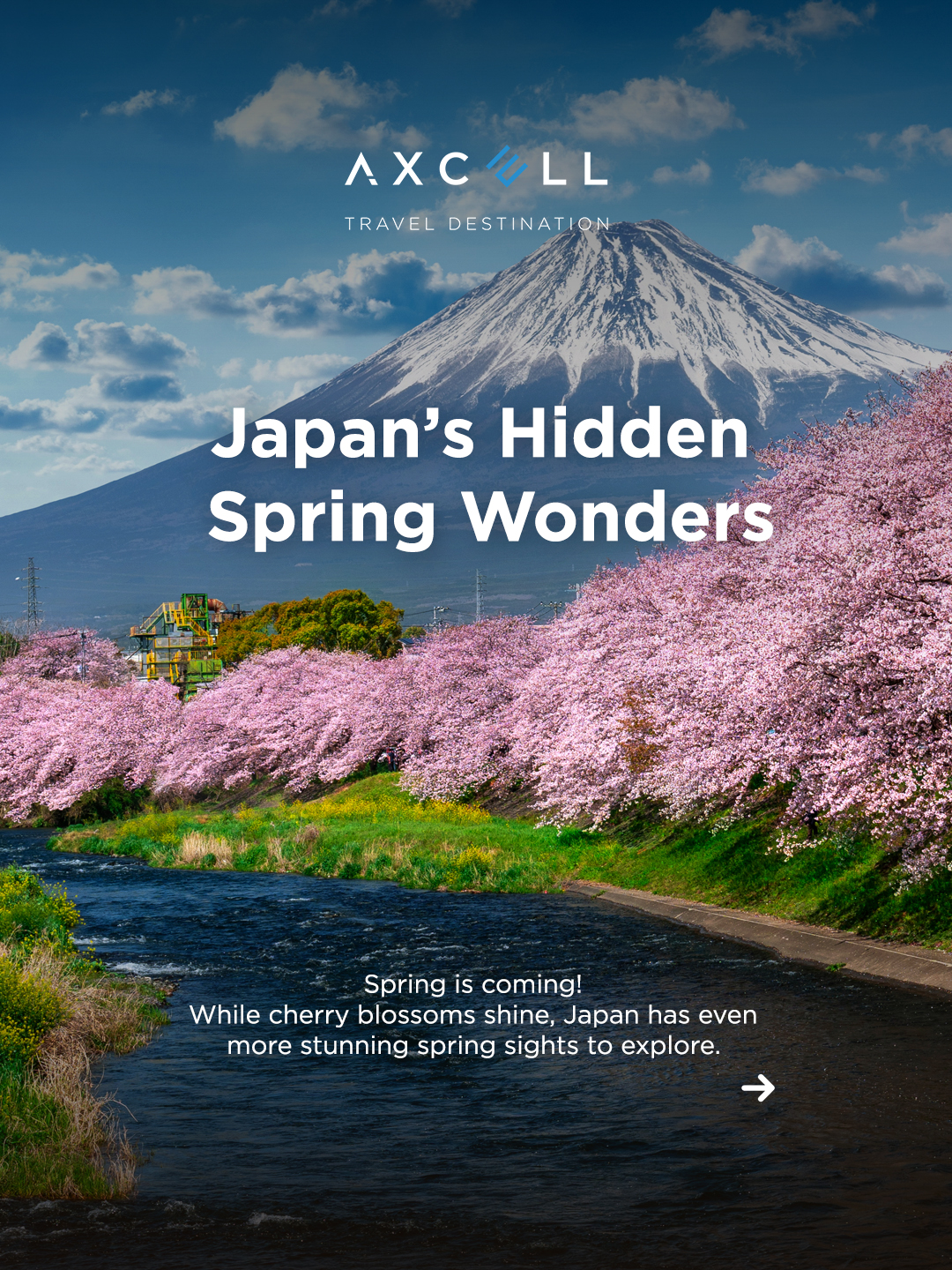
Japan’s Hidden Spring Wonders

Beyond Cherry Blossoms | Discover Japan’s Other Spring Masterpieces

When spring arrives in Japan, the world immediately thinks of cherry blossoms. Soft pink petals floating through the air have become the global symbol of Japanese spring.

But what if you skipped the sakura crowds?

Beyond the famous cherry blossom spots lies a different side of spring—one that feels quieter, more immersive, and equally breathtaking. From rolling hills blanketed in blue flowers to storybook villages and ancient moss forests, Japan offers hidden spring wonders that reveal the season in unexpected ways.

If you’re ready to explore something beyond the typical postcard views, here are three extraordinary destinations that redefine spring in Japan.

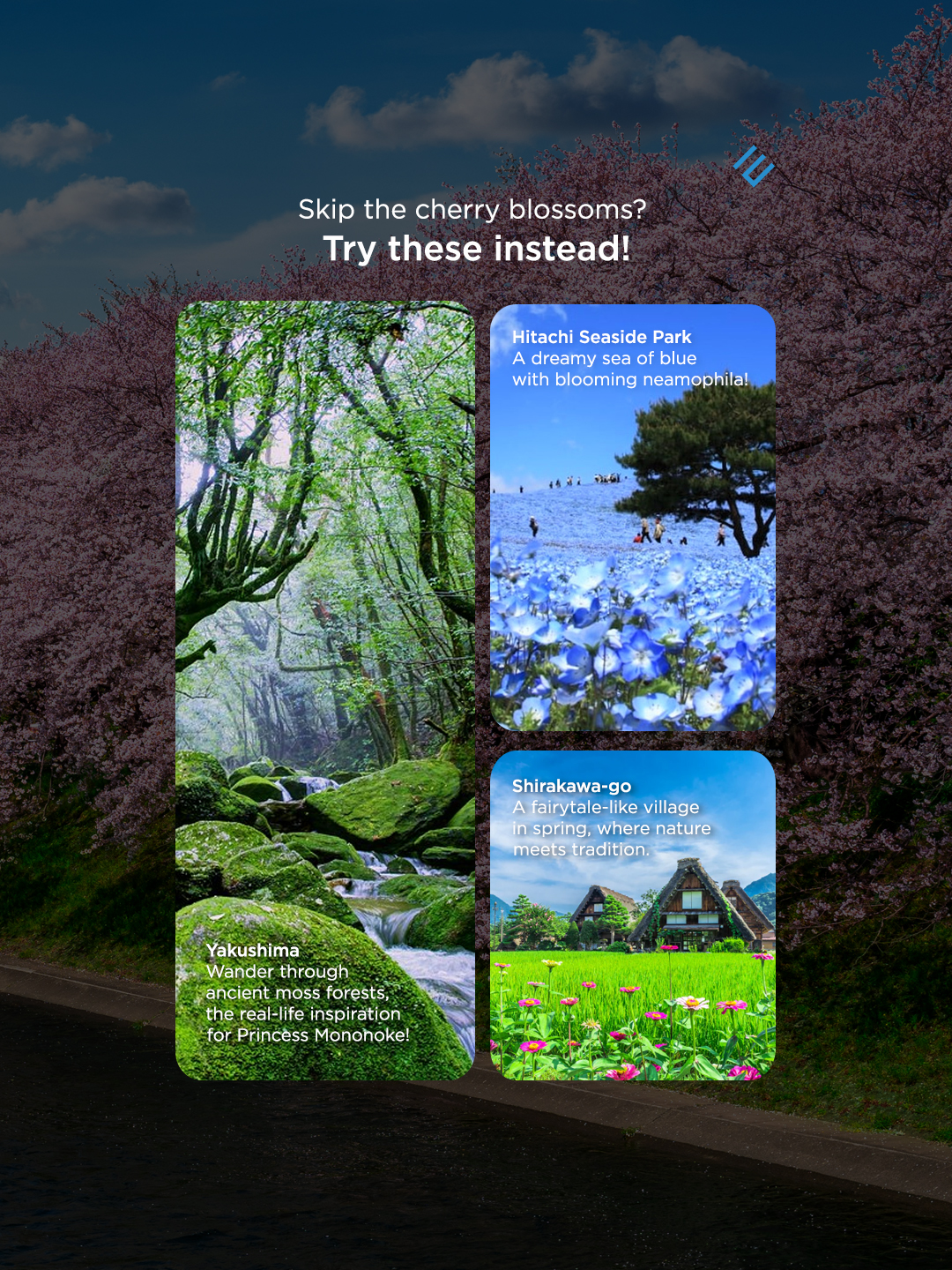
Hitachi Seaside Park

A Sea of Nemophila

Located in Ibaraki Prefecture, Hitachi Seaside Park transforms into a surreal landscape every spring. Instead of pink cherry blossoms, visitors are greeted by an endless field of delicate blue flowers known as nemophila.

From late April to early May, millions of tiny blue petals blanket Miharashi Hill, creating the illusion of a living sky beneath your feet. The color shifts gently under changing sunlight—from pale powder blue to deeper azure—blending seamlessly with the horizon.

Unlike cherry blossoms, which are scattered throughout cities, this floral spectacle feels expansive and immersive. You’re not just standing beneath blossoms—you’re walking through a sea of blue.

A Different Kind of Spring Atmosphere

One of the reasons Hitachi feels special is its openness. Wide pathways curve gently through the park, allowing visitors to wander at a relaxed pace. The air carries a soft floral scent, and the vast sky overhead amplifies the feeling of freedom.

It’s less about fleeting petals and more about vibrant, grounded color.

The park also features seasonal tulips, daffodils, and other blooms, making it a multi-layered floral experience throughout spring.

Why Choose Nemophila Over Sakura?

Cherry blossom season is famously short and often crowded. Hitachi’s nemophila bloom offers:

  • A slightly later viewing window

  • Expansive landscapes

  • Unique photography opportunities

  • A calmer atmosphere compared to major sakura cities

For travelers seeking a spring moment that feels dreamy yet less hectic, Hitachi Seaside Park delivers something refreshingly different.

Shirakawa-go

A fairytale village where nature meets tradition

Stepping Into Another Era

Nestled in the mountains of Gifu Prefecture, Shirakawa-go feels like a storybook come to life. Famous for its traditional gassho-zukuri farmhouses—with steep thatched roofs designed to withstand heavy snow—this UNESCO World Heritage site is often associated with winter scenes.

But spring brings its own magic.

As snow melts away, fresh greenery emerges around the village. Rice fields begin to reflect the sky, and mountain backdrops soften under new growth. The contrast between centuries-old wooden homes and vibrant spring landscapes creates a scene that feels both nostalgic and alive.

Spring’s Gentle Transformation

Unlike dramatic flower fields, Shirakawa-go’s beauty is subtle. It’s found in:

  • Mist drifting between traditional houses

  • Streams flowing gently through the village

  • Farmers preparing fields for planting season

  • Quiet pathways surrounded by blooming trees

Spring here feels intimate rather than spectacular—an invitation to slow down and appreciate harmony between people and nature.

Culture Rooted in Landscape

Shirakawa-go is more than scenery; it’s living heritage. Some of the historic houses still function as homes or guesthouses, allowing visitors to experience rural Japanese life firsthand.

Spring highlights this connection. As nature awakens, daily life continues in rhythm with the seasons—a reminder that in Japan, landscape and culture are inseparable.

For travelers seeking authenticity and tranquility, Shirakawa-go offers a softer, storybook version of spring.

Yakushima

Ancient moss forests and mythical inspiration

A World of Green

Far to the south, off the coast of Kyushu, lies Yakushima—an island often described as mystical. Recognized as a UNESCO World Heritage site, Yakushima is covered in dense forests, misty mountains, and moss that carpets nearly every surface.

In spring, the island feels especially vibrant. Rainfall nourishes ancient cedar trees, some over a thousand years old. The forest floor glows in deep shades of emerald.

This isn’t a typical floral spring destination. It’s a living, breathing ecosystem that feels untouched by time.


A Spring Experience for Adventurers

Yakushima is ideal for travelers who prefer hiking over hanami picnics. Trails range from moderate walks to more demanding climbs, offering encounters with waterfalls, wildlife, and ancient trees.

Spring temperatures are comfortable for exploration, and the forest’s greenery is at its peak.

For those seeking depth over spectacle, Yakushima offers a profound connection to nature.

The Real-Life Inspiration for Princess Mononoke

Yakushima’s mossy forests are widely believed to have inspired the landscapes in the Studio Ghibli film Princess Mononoke. Walking through these trails, it’s easy to see why.

Twisted roots, towering cedars, filtered light, and drifting mist create an atmosphere that feels almost mythical. Spring enhances this mood—bringing fresh growth and renewed energy to the forest.

The result is immersive rather than ornamental. You don’t just look at nature—you step into it.

Rethinking Spring in Japan

More than cherry blossoms

While cherry blossoms are undeniably beautiful, they represent only one interpretation of spring. Japan’s landscapes are diverse, and each region expresses the season differently.

  • Hitachi Seaside Park celebrates spring with bold color and wide horizons.

  • Shirakawa-go reveals spring through quiet tradition and rural charm.

  • Yakushima embodies spring as renewal within ancient forests.

Each destination offers something sakura cannot: distinct personality.

When Spring Becomes a Journey of Discovery

Japan’s spring is more layered than its pink petals suggest. By looking beyond cherry blossoms, travelers can uncover landscapes that feel intimate, dramatic, and deeply rooted in place.

Whether walking through waves of blue flowers, wandering a mountain village, or stepping into a moss-covered forest, these hidden spring wonders reveal a richer side of the season.

Sometimes, the most memorable travel experiences happen when you skip the obvious—and follow curiosity instead.

In Japan, spring doesn’t belong to one flower.
It belongs to every landscape willing to bloom in its own way.

A Place That Changes How You See the World

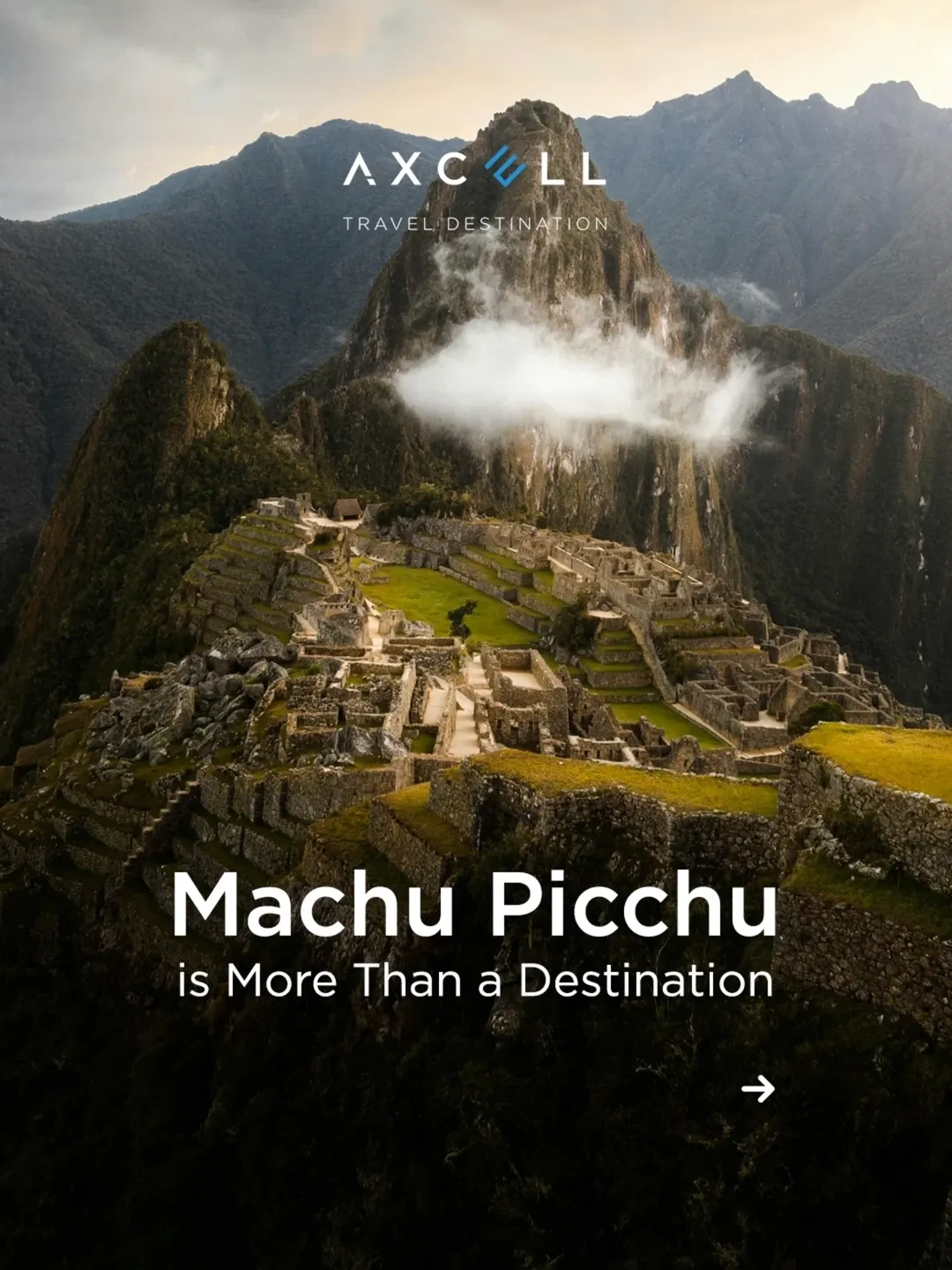
Many travelers describe Machu Picchu as transformative. Not because of grandeur alone, but because of what it represents: a civilization that achieved sophistication through harmony rather than dominance.

Standing among the ruins, surrounded by peaks and sky, perspective shifts. Modern concerns feel smaller. Time feels deeper. The experience becomes emotional, not just visual.

Machu Picchu leaves an imprint—not on your camera roll, but on your understanding of human possibility.

Craft Your Story Beyond the View

Want to explore Machu Picchu beyond the postcard views?
A journey this meaningful deserves careful design—one that uncovers hidden stories, respects the land, and allows moments to unfold naturally.

With Axcell Travel Destination, your Machu Picchu experience can be crafted with expert insight and personal intention. From guided exploration to seamless logistics, every detail is designed to deepen understanding and connection.

📩 DM us for a personalized Machu Picchu experience.

Because Machu Picchu isn’t just something you visit.
It’s a story you step into—one written in stone, cloud, and human imagination.

Thoughtfully Designed Journeys, Just for You

Start planning your thoughtfully designed journey with Axcell Travel Destination.

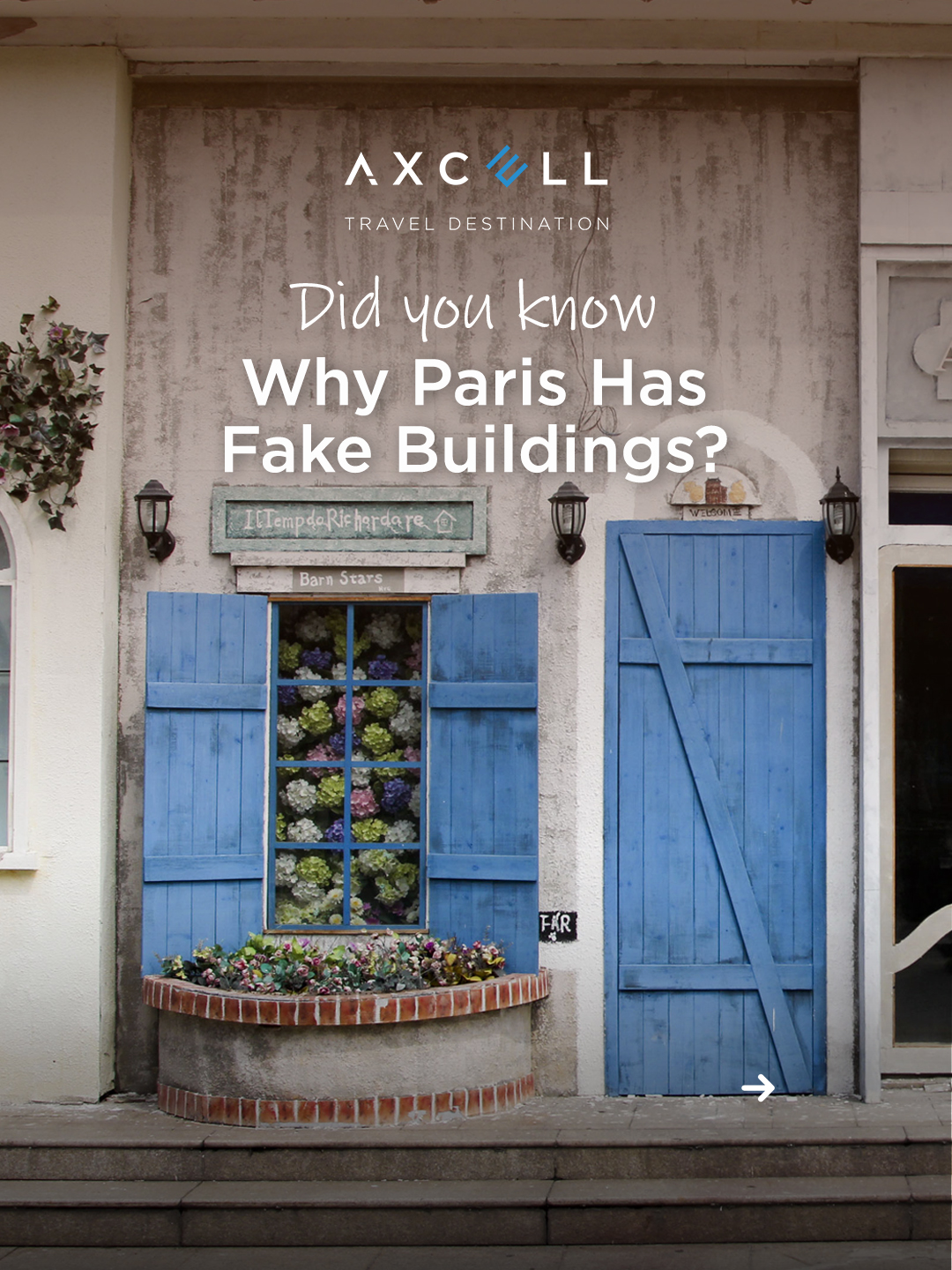
Did You Know Why Paris Has “Fake” Buildings?

Discover the Hidden Architecture Behind the City’s Timeless Beauty

When walking through Paris, it’s easy to fall in love with its uniform cream-colored facades, wrought-iron balconies, and perfectly aligned boulevards. The city feels cohesive, elegant, and almost theatrical—as though every building was designed to complement the next.

But look closer, and you might discover something surprising.

Some of Paris’s “buildings” aren’t buildings at all.

Behind certain ornate facades lie ventilation shafts, electrical substations, and maintenance facilities—carefully disguised to preserve the city’s historic charm. These architectural illusions reveal something fascinating about Paris: it values beauty so deeply that even its infrastructure must dress appropriately.

Let’s explore why Paris has fake buildings—and what they say about the city’s identity.

A City Designed for Visual Harmony

The Birth of Uniform Paris

To understand Paris’s hidden facades, we need to go back to the 19th century. Under Napoleon III, urban planner Baron Haussmann reshaped the city into what we now recognize as classic Parisian style—wide boulevards, symmetrical buildings, and cohesive architectural details.

This transformation created what we call Haussmann-style architecture, characterized by:

  • Cream limestone facades

  • Decorative iron balconies

  • Mansard roofs

  • Uniform cornice lines

The result was a city that looked intentionally designed from every angle.

Beauty as Public Policy

Unlike many cities that evolved chaotically over centuries, Paris made aesthetic coherence a priority. Visual harmony wasn’t accidental—it was enforced through urban planning rules.

This philosophy continues today. Paris carefully regulates building heights, facade materials, and exterior alterations to maintain its historic atmosphere.

And this is where the story of “fake buildings” begins.

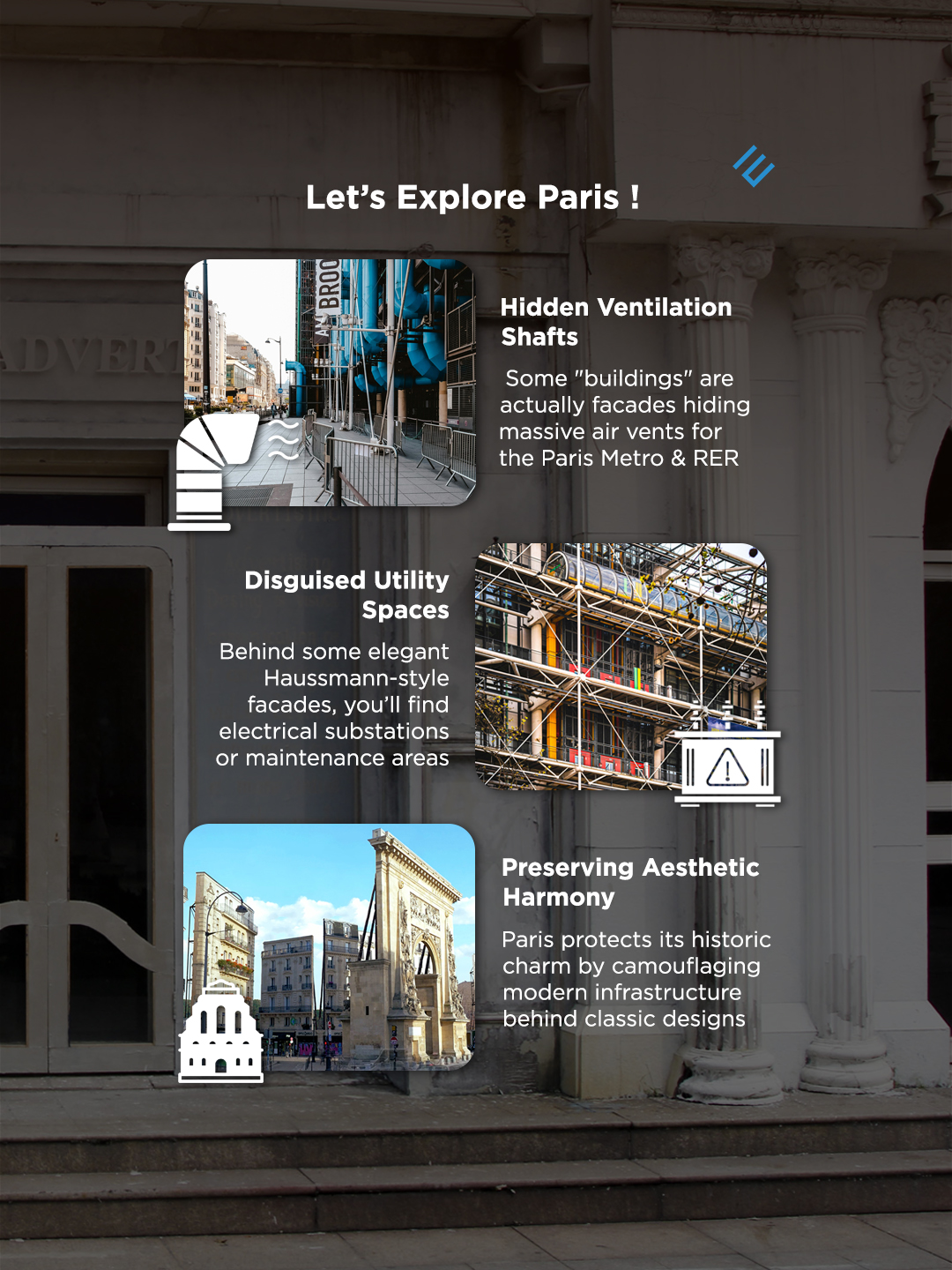
Hidden Ventilation Shafts

The Invisible Infrastructure

Beneath Paris lies a vast network of tunnels belonging to the Paris Metro and the RER. These underground systems require extensive ventilation to regulate airflow, temperature, and safety.

Large ventilation shafts are essential—but visually disruptive.

Rather than installing exposed industrial structures, the city chose a different solution: disguise them.

Buildings That Aren’t What They Seem

Some structures that appear to be residential or office buildings are actually carefully crafted facades hiding enormous air vents. From the street, they look like elegant Haussmann-style properties. Windows, balconies, and decorative details are replicated perfectly.

But behind those windows?
No apartments. No offices.
Just ventilation systems quietly serving millions of commuters.

It’s a brilliant compromise—modern engineering concealed within historic aesthetics.

Disguised Utility Spaces

Infrastructure in Disguise

Ventilation shafts aren’t the only hidden structures. In certain neighborhoods, what appears to be a grand residential building may actually house:

  • Electrical substations

  • Maintenance facilities

  • Utility control rooms

Instead of constructing obvious industrial facilities, Paris integrates them seamlessly into the urban fabric.

Why Go to Such Lengths?

Many cities accept visible utility structures as part of urban reality. Paris, however, treats its skyline and streetscape almost like a curated museum.

Behind elegant facades that mirror surrounding buildings, modern infrastructure hums quietly—ensuring electricity, transit, and public services function smoothly without disrupting visual continuity.

It’s architectural camouflage at its finest.

Preserving Aesthetic Harmony

A Commitment to Historic Identity

Paris is one of the world’s most photographed cities. Tourism plays a central role in its economy, and much of that appeal lies in its consistent architectural character.

If large industrial vents or exposed mechanical systems punctured the skyline, the visual rhythm of the city would change dramatically.

By camouflaging modern infrastructure behind classic designs, Paris protects its identity.

The Psychology of Urban Beauty

There’s also a psychological element. Walking through Paris feels immersive because the visual language remains consistent. The repetition of Haussmann facades creates a sense of calm and order.

Hidden infrastructure ensures that practical necessities do not interrupt that experience.

In other words, Paris prioritizes not just function—but feeling.

A City That Balances Past and Present

Not Everything Is as It Appears

The concept of “fake buildings” might sound deceptive—but in Paris, it’s a form of respect. It acknowledges the need for modern systems while honoring the city’s architectural heritage.

The infrastructure is real.
The facade is historic.
The illusion is intentional.

Lessons in Urban Design

Paris demonstrates that cities do not have to choose between progress and preservation. With thoughtful planning, they can integrate both.

Rather than erasing the past or exposing raw modernism, Paris wraps innovation in tradition.

It’s a reminder that cities, like people, can evolve without losing their character.

The Magic of What You Don’t See

The next time you stroll through Paris and admire its elegant buildings, remember: some of them may not be what they seem.

Behind those symmetrical windows could be roaring air systems for underground trains. Behind ornate stonework could be electrical grids powering the city.

But that’s part of the magic.

Paris teaches us that beauty can coexist with practicality—and that sometimes, the most impressive design is the one you never notice.

In a world where modern infrastructure often dominates skylines, Paris chooses subtlety. It chooses harmony. It chooses to let its history remain uninterrupted—even when the future is running quietly behind the walls.

And perhaps that’s why the city feels timeless.

Because in Paris, even the “fake” buildings are part of something very real:
A commitment to elegance, identity, and the art of thoughtful design.

Thoughtfully Designed Journeys, Just for You

Start planning your thoughtfully designed journey with Axcell Travel Destination.